


Building Projection Mapping: How to Create Stunning Architectural Displays
TL;DR: Building projection mapping is a 3D video technique used to transform large architectural facades into dynamic visual illusions. In 2026, creating these monumental shows requires high-brightness projectors (10,000+ lumens) and precise mapping software. With user-friendly tools like HeavyM, mapping complex architectural details like windows and pillars is now accessible to anyone.

Building projection mapping: discover how to produce this awesome feat!
When you mention projection mapping (or video mapping), the first thing that comes into mind is architectural structures lit up. And for good reason, it is the practice’s most common and most well known form. At least for average people outside of the AV world. And it’s most telling form, even if they don’t have the terminology, is: building projection mapping.
What is projection mapping?
The projection surface is the fundamental distinction between 2D and 3D projection mapping. The objective of projection mapping is to create optical illusions by putting visual content on static volumes. Audio elements can further enhance the immersive experience by ensuring that sounds complement the visual displays, fully engaging the audience during events. Projection mapping can also create an immersive environment, surrounding the audience with visuals for a seamless, enveloping experience.
So we know that any 2D and 3D physical element can become a projection surface. That means quite literally any object and anything.
Effectively, going from 2D to 3D provides an enhanced experience for the spectator. Interactive projection mapping takes this a step further by allowing for multimedia experiences that enhance viewer engagement and interaction, making the visuals not only immersive but also participatory.
Buildings: most valuable projection surface
Examples
Halloween Haunted House
Mapping is a great medium for product promotion, and Samsung understood that for Halloween. Disney’s Haunted Mansion is one of the earliest and most famous examples of using projection mapping to create an immersive experience. The brand transformed a 300-year-old house into a haunted mansion in a British village. Similarly, Vancouver’s Façade Festival features local artists projecting creations onto the Vancouver Art Gallery, blending artistic expression with architectural beauty. Battersea Power Station was illuminated with dynamic visuals as part of its transformation into a mixed-use complex, showcasing how projection mapping can highlight architectural renewal and urban development.
Cathedral, Fêtes des Lumières
Building, lights of Boston
Building projection: state-of-the-art
AV big players
First of all, there are AV big players. They produce enormous works, using numerous ultra performant projectors for a single project. Some of these projects have achieved the status of the world’s largest or most innovative projection mapping displays, setting new standards in the industry. The visual rendering is of the highest order, and the financial cost is just as high. High brightness RGB pure laser projectors are ideal for larger projection mapping projects. These projectors can illuminate larger surfaces, reducing the number of projectors needed and optimizing the overall setup. For example, Ambaji, India’s Gabbar Hill was illuminated with RGB pure laser projectors for a stunning 3D projection mapping show.


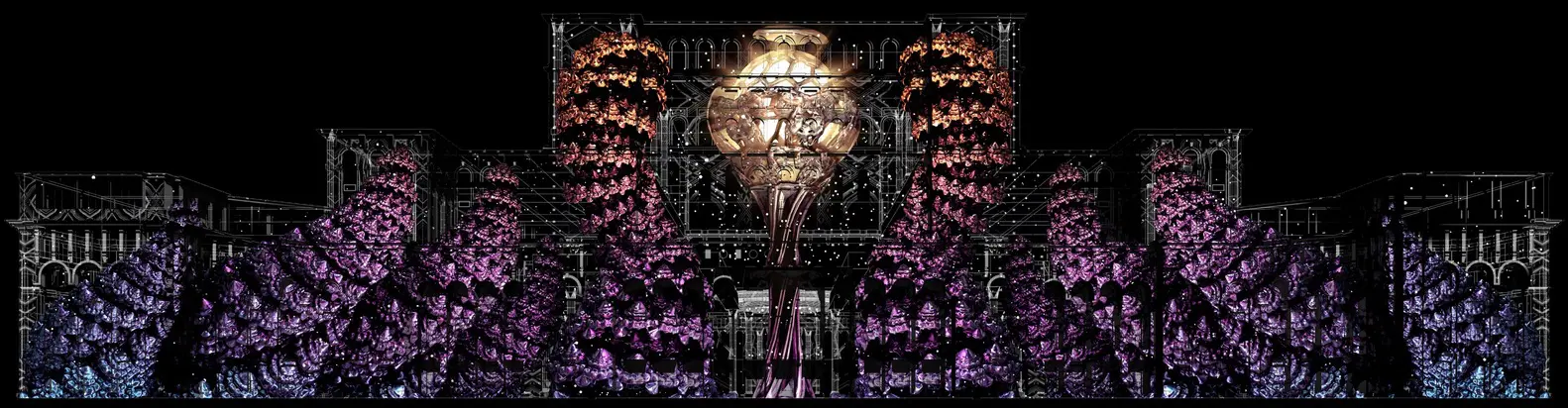
LimeLight – interconnection – 2016
Projection mapping software
There are two main types of projection mapping software. First of all, there are those used for gigantic and significant projects in every way. These are highly specialized softwares, reserved for AV big players. They require extensive training sessions, dedicated state-of-the-art computer equipment and are particularly costly. (About 10 000€ per projector). Pixera, Disguise.one or Watchout are some of these softwares.
For anything less than mapping the world’s biggest and most iconic monuments, perfect solutions exist. These are softwares whose purpose is to democratize the practice of projection mapping by allowing users to easily define and customize their projection surfaces.
They can be used with commercially available projectors and work with powerful yet personal computers (such as gaming ones). These softwares can be easily downloaded and tried firsthand. They deliver optimal performance, superb rendering and their cost is much less than those offered by AV big players. Tutorials available on their YouTube channel offer tips on using their software. HeavyM is one of these software; reliable, powerful and works with any kind of projector and MAC/Windows compatible. The world’s most user-friendly mapping software can be used in a myriad of different scenarios, and building projection is one of them.
Technical Requirements for Building Projection Mapping
Surface Preparation for Optimal Projection
Projector Placement for Maximum Impact
Careful consideration of projector placement is essential for maximizing the impact of your projection mapping project. By taking the time to plan and optimize your setup, you can create breathtaking visuals that captivate and inspire your audience.
Content Creation for Building Projection Mapping
Video Projection Mapping
Advanced Techniques in Building Projection Mapping
Advanced techniques in building projection mapping push the boundaries of what is possible, creating complex and immersive experiences that captivate audiences. These techniques can be used to create an immersive environment, fully surrounding the audience with projected visuals for a seamless and enveloping experience. These techniques often involve the use of specialized software and cutting-edge technologies, such as 3D projection and video mapping, and motion design. For example, the ‘Edge of Government’ exhibition at the World Government Summit used projection mapping to create an interactive digital landscape, demonstrating how this technology can be applied to innovative and thought-provoking installations.
By combining these advanced techniques, artists can create projection mapping displays that are not only visually impressive but also deeply immersive and interactive. These techniques allow for the creation of unique and memorable experiences that push the boundaries of creative expression.
Interactive Projections
Overcoming Challenges in Building Projection Mapping
Weatherproofing
Building projection mapping with HeavyM
Here’s a superb example of how to do a building projection with HeavyM:
In this case, HeavyM was used to create a mapping on a 6-storey office building staircase. The building offers dynamic shapes to play with, along with a repeating design and white façade perfect for projection mapping.
First step: define the outlines of the area you want to map. The staircase is part of a much wider building complex that could have been mapped as well. But only the staircase was needed in this instance.
Simply take a picture of the projection area from the exact same spot where the projector will be placed. This way, it will then be easy to use the image as a background support to start creating.

To successfully realize a building projection mapping, prep work is essential. In HeavyM, you can easily import an image as a background to start testing ideas. Navigate seamlessly through the software thanks to the user-friendly interface and generate elements to see the results in real-time. With the vast library of ready-to-use effects, the number of combinations possible is almost infinite.
Once the necessary preparations are done, it is time to test your building projection mapping at full size. The world’s easiest projection mapping software is compatible with all displays: any projector or LED screen.
Wield the dynamic warping tool to perfectly adjust your design to the building projection surface for an optimal rendering. No amount of prep work can spare you from small adjustments and final tweaks on D-Day.

With its ultra fast media player, HeavyM also enables you to import content created in other software. Organize content in playlists and test and run them simultaneously in HeavyM thanks to its powerful graphics engine.
Developing a building projection can be a daunting task, but the world’s simplest-to-use mapping software makes it all easier. In fact, HeavyM guarantees you top notch performance and reliability through its graphics engine. While creation becomes smooth thanks to user-friendly interface combined with ultra quick media player and extensive visual effects library. To create your most ambitious projects, HeavyM is the only tool you need. HeavyM also offers a sound reactivity module for automatic synchronization of the mapping with music. Additionally, HeavyM provides free webinars to help users learn the basics of projection mapping. Many schools and training programs also use HeavyM to teach projection mapping, making it an accessible tool for learners. The integration of audio elements ensures that the sounds complement the visual displays, creating an immersive and unforgettable atmosphere.

To be continued
Learn more about projectors
We have created a detailed guide to choosing the right projector for your needs. Discover our tips and mistakes to avoid in this guide that explains the different features step by step. High-powered projectors cast lighting effects that transform buildings into dynamic canvases for advertising and artistic displays.
Festivals of Luminous Wonders
Dive into the world of light festivals where landmarks transform into canvases for breathtaking projections. Explore cities glowing with artistic brilliance and the magic behind these luminous celebrations. Projection mapping can transform public landmarks into vibrant digital art stages, merging urban structures with contemporary art.