

Definition and Examples of Video Mapping
TL;DR
Video mapping, or projection mapping, is a technology that turns irregularly shaped physical objects—like buildings or stages—into display surfaces for video projection. Using specialized software like HeavyM, the projected light is warped to perfectly match the 3D surface, creating stunning immersive illusions without altering the real structure.
What is Video Mapping?
Video mapping is a projection technique used to transform objects and elements into display surfaces for video projection. This method, which emerged in the 2000s, involves projecting videos and visual animations by playing with the irregularities of volumes using one or more projectors.
The goal of mapping is to create optical illusions by placing visual content on static volumes.
The projection surface is the fundamental distinction between 2D and 3D video mapping.
Even though the terminology might not be widely known to the public, the examples we can provide are sufficiently clear.
Indeed, monumental mapping—the projection of videos onto monuments—is the most well-known form of video mapping. It takes 3D elements into account and therefore uses 3D video mapping.
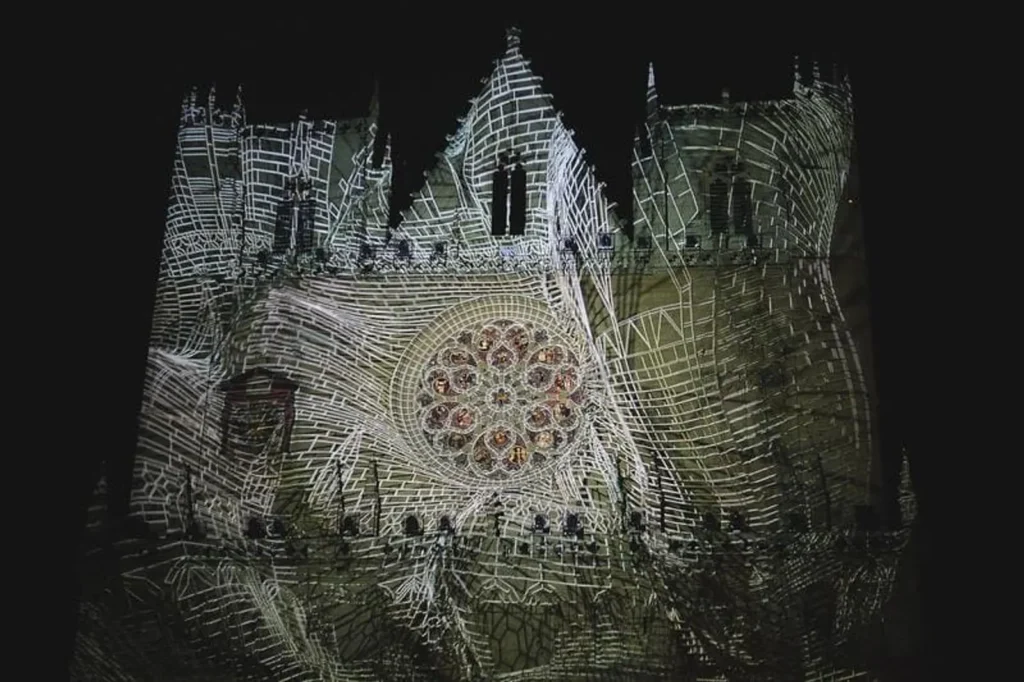
2D mapping is generally done on flat or curved surfaces where the measurable dimensions are length and height. When working with objects and textured surfaces, 3D video mapping is used to account for depth and other spatial characteristics.
In general, the three-dimensional factor brings more attention and interest to the creation. The greater the dimensional interest, the more spectacular and relevant the video mapping becomes. A 3D video mapping inherently generates more value and truly comes to life.
Indeed, moving from 2D to 3D enhances the audience’s experience.
For example, here are some of the most exceptional 3D video mappings.
For What Types of Projects?
Originally, building facades
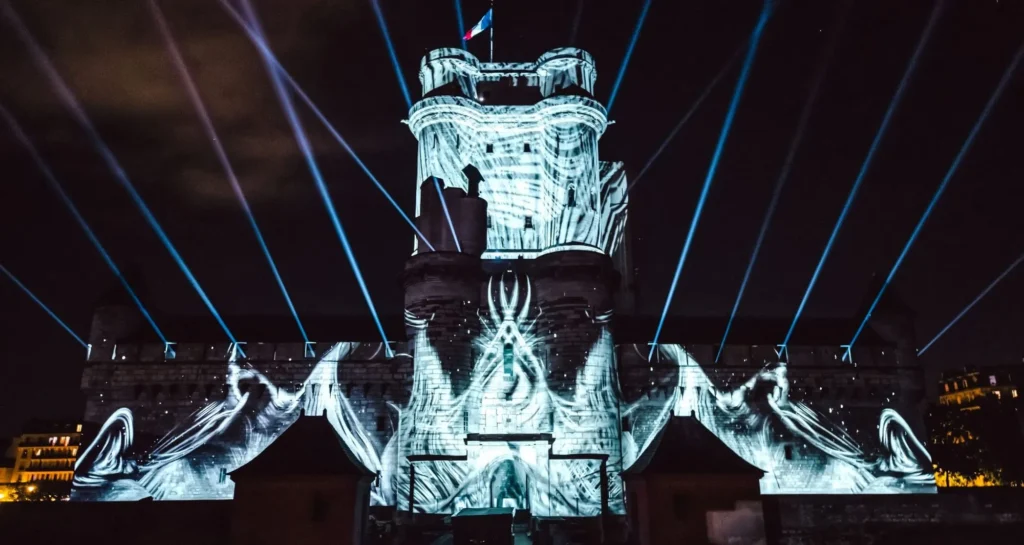
We know that video mapping can be applied to absolutely any physical element—anything from the infinitely small to the gigantic. For the latter, the market is dominated by major players in the audiovisual industry. They create massive works by combining multiple high-performance projectors for a single project. The visual result is exceptional, and so is the financial cost.
The major players in the audiovisual industry are typically technical providers who supply the essential technology for large-scale experiences. They collaborate with creative agencies to produce the audiovisual content that will be projected.
The studio is responsible for creating 3D content that will fit the building perfectly and exclusively. The studio receives plans, photos, or drawings in any format so they can work on them before the event. Content creation process is crucial, and it is often offered as a service by audiovisual companies.
Video Mapping for All Projects
On the other hand, video mapping software has democratized this discipline, once reserved for technical experts, by making it accessible to a wider audience. Video mapping is now available to professionals, event agencies, established artists, and entertainment specialists.
Here are some examples:
This stone quarry mapping is a real-time audiovisual performance where music and imagery are created live underground.
In this five-part journey, the visuals are linked to sound using audio data that drives generative patches in TouchDesigner.
Creative technologist Data.Flaw created an exciting gamified experience. He took interactivity to the next level by connecting a PlayStation 5 controller to HeavyM 2 via OSC.
To continue
Links and Differences with VJing
This guide was written by HeavyM, a company specializing in video mapping since 2013.
For any questions, comments, advice, etc., please use this contact form: https://help.heavym.net/hc/requests/new. Response guaranteed within 24 hours.
Frequently Asked Questions (FAQ)
What is the difference between projection mapping and video mapping?
There is no difference; they are exactly the same technique. Both terms describe the process of using specialized software to map and project video onto 3D surfaces instead of standard flat screens.
What do you need for video mapping?
To create a video mapping project, you need three basic elements: a digital projector, a computer (Mac or Windows), and dedicated projection mapping software like HeavyM to align your visuals with the physical surface.
What are the most common examples of video mapping?
The most popular applications include architectural projection on building facades, live stage design for concerts and DJs, immersive art installations in museums, and interactive displays for corporate events and retail windows.
Which software is best to start video mapping?
For beginners and professionals looking for speed, HeavyM is widely considered the most accessible projection mapping software. It offers a simple interface, built-in visual effects, and requires absolutely no coding to achieve impressive results.