

Choose the best computer for your mapping projects
TL;DR: What Computer Specs Do You Really Need in 2026?
For reliable projection mapping in 2026, aim for at least an Intel Core i5 or AMD Ryzen 5 (or Apple M2), 16 GB RAM, SSD storage, and an NVIDIA RTX 4060 or AMD RX 7600 with 8 GB VRAM. For multi-projector HeavyM shows with effects-heavy timelines, step up to 32 GB RAM and an RTX 4070 or better to maintain smooth performance throughout your sets.
Key Takeaways
- Minimum specs for 2026: Intel Core i5/Ryzen 5, 16 GB RAM, RTX 4060/RX 7600 (8 GB VRAM) handles single-projector 1080p setups comfortably.
- Recommended for professionals: Intel Core i7/Ryzen 7, 32 GB RAM, RTX 4070/RX 7700 XT (12 GB VRAM) supports dual 4K or effects-heavy workflows.
- GPU and RAM outweigh CPU clock speed for projection mapping software—prioritize graphics power and memory over processor frequency.
- Apple Silicon Macs (M2/M3/M4 series) are fully capable alternatives, offering excellent performance per watt for touring artists.
- Gaming laptops and desktops with RTX 40/50 series GPUs deliver outstanding value for projection mapping needs.
What Makes a “Best Computer” for Projection Mapping in 2026?
Projection mapping is essentially real-time video playback combined with effects, warping, and geometric correction across one or more projectors. Your computer must handle all of this simultaneously without dropping frames during live shows.
The four pillars that determine your system’s mapping capabilities:
- CPU: Handles video decoding (H.265/HEVC streams), operating system tasks, MIDI/OSC protocol processing, and general app responsiveness. A solid mid-range processor keeps everything running smoothly.
- GPU: The primary performance driver. Real-time effects like bloom, distortion, and particle systems run on the graphics card, along with warping algorithms and multi-screen output. This is where you should invest most heavily.
- RAM: Determines how many clips, layers, and applications you can run simultaneously. More ram prevents system slowdowns when working with complex timelines.
- SSD: Fast storage ensures quick asset loading and smooth playback. NVMe drives are essential in 2026—spinning hard drives simply cannot keep up.
Beyond raw specs, stability matters enormously for live performance. Robust cooling prevents thermal throttling during hour-long shows. Reliable video outputs eliminate artifacts and signal drops. A well-built machine that runs consistently beats a faster one that crashes.
Both laptops and desktops can be the right choice depending on your workflow. Touring VJs need portability. Permanent installations benefit from desktop power and upgradability. The following sections break down exactly what specs you need for each tier of use.
What Are the Minimum, Recommended, and Pro Specs for Projection Mapping in 2026?
This section provides a quick spec overview for different levels of use—from bedroom experiments to large-scale architectural visualization projects.
Level | CPU | RAM | GPU | Storage | Simultaneous Video Streams | Typical Use Case |
|---|---|---|---|---|---|---|
Minimum | Intel Core i5 or AMD Ryzen 5 | 16 GB | NVIDIA RTX 4060 or AMD RX 7600 (8 GB) | 512 GB SSD | 2-8 simultaneous 1080p streams | Single 1080p projector, learning, small bars |
Recommended | Intel Core i7 or AMD Ryzen 7 | 32 GB | RTX 4070 or RX 7700 XT (12 GB) | 1 TB SSD | 3-5 simultaneous 4K streams | Dual projectors, regular events, touring VJs |
Pro | Intel Core i9 or AMD Ryzen 9 | 64 GB | RTX 4080/4090 (16 GB+) | 2 TB+ SSD | 5+ simultaneous 4K streams | Multi-projector edge-blending, large installations |
Apple Silicon MacBook Pro and Mac mini/Studio models with M2, M3, or M4 chips are highly capable alternatives. However, 16 GB of unified memory is a strict minimum for these machines. Unlike PCs that have dedicated VRAM on the graphics card, Mac memory is shared between the CPU and GPU. If you run complex HeavyM projects with multiple streams, upgrading to 32 GB or more is highly recommended to prevent bottlenecks.
For typical HeavyM use: the minimum tier handles bedroom experiments and single-projector club sets. The recommended tier supports regular events with dynamic visual displays. The pro tier powers touring productions, building mappings, and complex interactive installations.
How Does CPU Choice Affect Projection Mapping Performance?
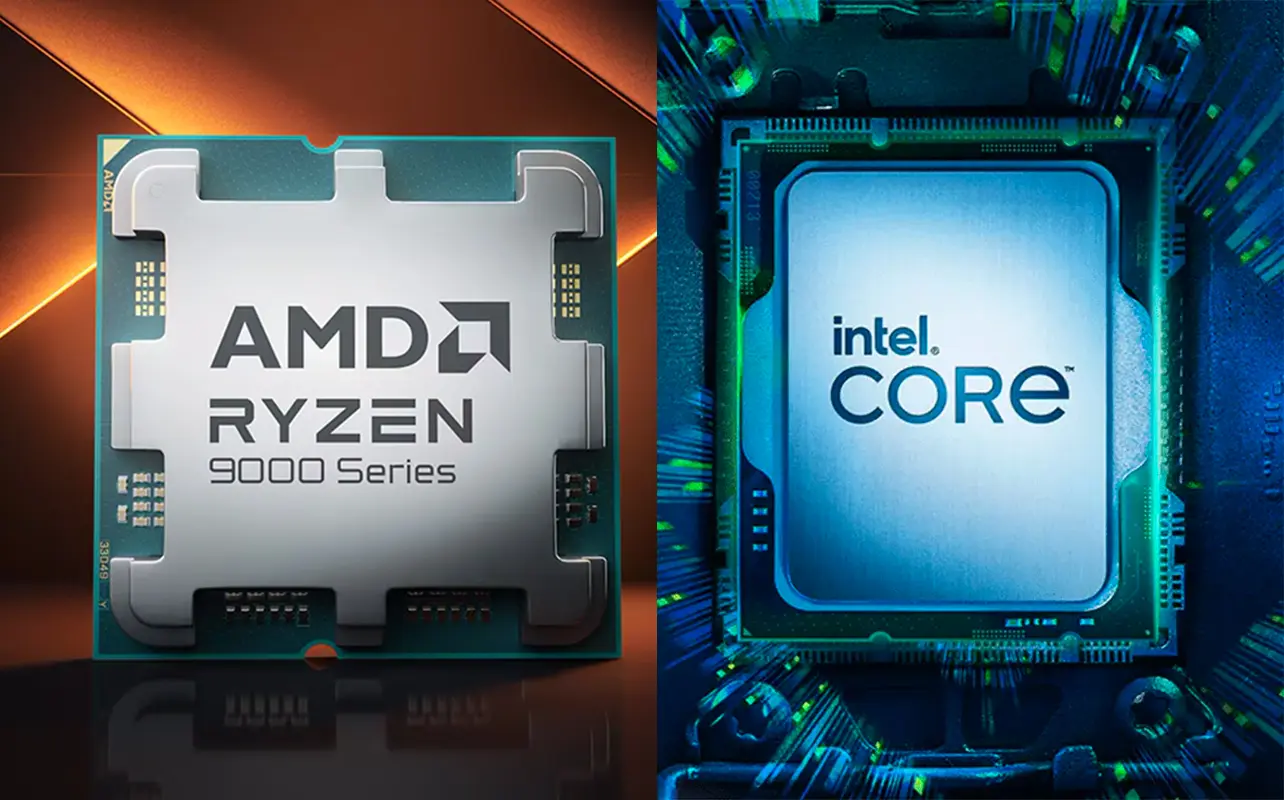
The processor primarily handles the decoding of heavy video codecs (like H.264 and H.265), runs your operating system, and processes MIDI/OSC signals. While the CPU decodes the video, it must be paired with ultra-fast storage to prevent bottlenecks. Using NVMe Gen4 or Gen5 SSDs is essential to drastically reduce latency when loading and triggering multiple high-resolution clips simultaneously in HeavyM.
CPU recommendations by tier:
- Minimum (2026): Recent 6-core Intel Core i5 (155H-series) or AMD Ryzen 5 (8600G/9600X), or Apple M2 with 8 CPU cores.
- Recommended: 8-12 core Intel Core i7 (14700HX) or AMD Ryzen 7 (9700X), or Apple M3/M4 with 10-14 cores. Ideal for running multiple applications simultaneously.
- Pro: High-core Intel Core i9 (15900K) or AMD Ryzen 9 (9950X) for multi-output, multi-layer setups with simultaneous streaming.
Selection guidance:
- Prioritize sustained clock speeds and good cooling over peak frequency numbers. Look for H/HX suffixes on laptop chips, which indicate higher power limits.
- Typical bottlenecks emerge during heavy H.265 4K playback or when running video editing plus mapping plus streaming simultaneously.
- For most HeavyM workflows, a solid mid-range processor is sufficient since the software offloads rendering to the GPU.
How Important Is the GPU and VRAM for Projection Mapping?
The graphics card drives approximately 90% of your projection mapping workload. Real-time warping, blending masks, viewport navigation effects, and multi-screen outputs all run through GPU shaders. This is where you see the biggest performance differences between systems.
Why dedicated GPUs matter:
- Integrated graphics (Intel Arc, Apple integrated) can handle dual 1080p outputs with basic effects, but dedicated NVIDIA GeForce RTX or AMD Radeon RX cards deliver 4x the throughput for serious shows.
- Modern projection mapping software relies on CUDA/OpenCL shaders for mesh deformation across thousands of control points.
- Dedicated VRAM buffers high-resolution textures—each mipmapped 4K asset consumes 2-4 GB.
- Pay attention to the TGP (Total Graphics Power): In 2026, not all laptop GPUs are created equal. An RTX 4070 in a thin laptop might be capped at a “low power” 60W, performing significantly worse for real-time effects rendering than a “full power” 115W-140W version. Always check the wattage before buying.
- Use NVIDIA Studio Drivers: For maximum stability during live performances with HeavyM, we strongly recommend installing NVIDIA Studio drivers rather than “Game Ready” drivers. They are rigorously tested for creative workflows and real-time rendering.
Practical baselines:
- RTX 4060 / RX 7600 (8 GB VRAM): Single or dual 1080p outputs with effects. Handles most club VJ sets without frame drops.
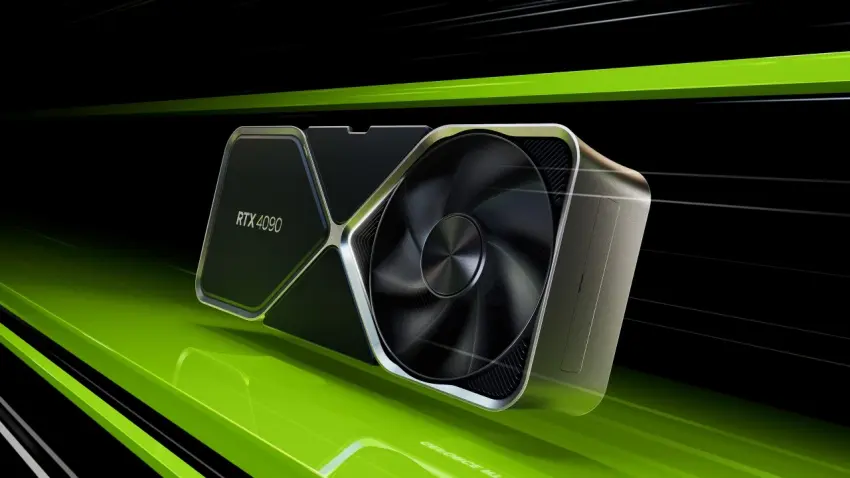
- RTX 4070+ / RX 7700 XT (12 GB VRAM): 4K content and multi-projector rigs. The sweet spot for professional grade performance.
- RTX 4080/4090 (16 GB+ VRAM): Complex edge-blending, generative content, and 4+ projector setups.
VRAM guidance: 6-8 GB minimum for modern mapping, 12 GB+ safer when running multiple 4K layers simultaneously.
Both NVIDIA and AMD work well with HeavyM. NVIDIA offers a strong ecosystem with features like NVENC encoding. AMD provides competitive rasterization performance at similar price points.
Apple Silicon note: M-series chips use unified memory shared between CPU and GPU. For intensive mapping, 24-48 GB unified memory is recommended—the M3 Pro with 24 GB roughly matches an RTX 4060 in mapping benchmarks while drawing significantly less power.
Real-world example: An RTX 4070 laptop sustains 3x 1080p projectors at 60fps with HeavyM effects running at 95% GPU utilization and 75°C temperatures. An older GTX 1080 Ti struggles at 40fps with visible frame drops under the same conditions.
How Much RAM and Storage Do You Need for Projection Mapping Projects?
RAM determines the number of clips, layers, and apps you can run simultaneously. Each 4K frame consumes approximately 50 MB of memory, and complex timelines with 20+ layers can easily exceed 20 GB peaks. Fast SSDs are non-negotiable in 2026 for smooth asset loading.
RAM recommendations:
- 16 GB: Absolute minimum for live projection mapping with HeavyM. Handles 5-10 1080p clips without paging.
- 32 GB: Sweet spot for most professionals running DAW plus visuals plus control software. Provides sufficient ram for complex workflows.
- 64 GB+: For massive shows, 4K content libraries, and combining mapping with real-time generative tools like Unreal Engine.
Always use DDR5 dual-channel memory for optimal bandwidth (80+ GB/s).
Storage recommendations:
- Always choose NVMe SSD: Gen4 or Gen5 drives with 5000+ MB/s reads. HDDs cannot load large files quickly enough for live work.
- 512 GB workable, 1 TB+ strongly recommended: HeavyM itself needs minimal space, but ProRes and EXR assets balloon into terabytes.
- External Thunderbolt/USB-C SSDs (3000 MB/s+) for media libraries and backups.
- Consider dedicating a separate partition for performance assets, isolating them from OS operations.
Mac vs PC in 2026: Which Is Better for Projection Mapping?
Both operating systems run HeavyM natively, so your choice should depend on hardware priorities rather than software compatibility. This remains platform-neutral rather than declaring a universal winner.
Windows PCs:
- Best choice for maximum GPU variety—RTX 40/50 series, Radeon RX 7000/8000 options.
- Flexible connectivity with more native HDMI/DisplayPort outputs. Easy eGPU expansion on older machines via Thunderbolt.
- Common platform in clubs and rental houses, simplifying compatibility issues. Scales easily to rackmount or mini-PCs for permanent installations.
- Greater budget flexibility, especially in the mid range and budget friendly tiers.
Apple Silicon Macs:
- Excellent performance per watt and low noise—ideal for touring artists and small venues where fan noise matters.
- Stable macOS environment with fewer driver crashes. Strong choice for users already in the Apple ecosystem.
- Potential output limitations: fewer native video outputs, often requiring Thunderbolt docks or adapters. Always verify dock compatibility carefully before purchase.
- Seamless workflow integration with Final Cut, Motion, and other creative tools.
Decision guidance: Choose Windows if you need many GPU options, maximum outputs, and tight hardware budgets. Choose Mac if you value portability, quiet operation, and ecosystem integration. HeavyM supports both equally, allowing users to prioritize hardware fit over OS preference.
What Types of Machines Are Best: Laptop vs Desktop vs Mini PC?
The right laptop, desktop, or mini PC depends on your mobility needs, output requirements, and upgrade plans.
Laptops:
- Ideal for touring, pop-up events, VJs, and artists performing in multiple venues.
- Prioritize cooling quality, GPU TGP (power limit), and number of video outputs over ultra-thin designs.
- Recommended models in 2026: 15-18” machines like ASUS ProArt, ASUS ROG Zephyrus, MSI Raider, Razer Blade, Lenovo Legion, or MacBook Pro. These offer strong gpu performance in portable packages.
- Look for MUX switches that bypass integrated graphics for direct GPU output, reducing latency.
- Weight considerations: high performance laptop models typically range 2-3.6 kg.
Desktops:
- Best raw power and easiest future upgrades (GPU swaps, more RAM, additional SSDs).
- Suited to studios, permanent installations, and venues where the machine stays on site.
- Use quality PSUs (1000W+ for RTX 4090), good airflow cases, and dedicated UPS for power protection.
- Consider rackmount configurations with redundant power supplies for 24/7 reliability.
Mini PCs / NUC-style machines:
- Great for discreet permanent mappings in museums, retail, restaurants, and educational settings.
- Limited GPU choices but some models accept desktop-class GPUs or feature powerful integrated solutions.
- Critical: verify thermal design and 24/7 reliability before large-scale deployment. Low-profile designs under 40dB noise are ideal.
Choose based on mobility needs and upgrade plans rather than benchmark numbers alone.
Which 2026-Ready Configurations Are Ideal for HeavyM Users?
These concrete examples match HeavyM workflows—not brand endorsements, but practical reference points.
Portable Performer Laptop:
- 15-16” Windows laptop with Intel Core i7-14700HX or AMD Ryzen 7 8845HS, RTX 4070 (140W), 32 GB DDR5 RAM, 1 TB PCIe5 SSD.
- Suitable for 1-3 Full HD projectors with HeavyM effects and light real-time mixing.
- Target weight ~2-2.5 kg with robust cooling. Models like ASUS ProArt P16 or MSI Raider offer this balance.
- Perfect as a mobile workstation for regular gigs.
Studio & Installation Desktop:
- Intel Core i9-15900K or AMD Ryzen 9 7950X3D, RTX 4080 or 4090, 64 GB DDR5, 2 TB NVMe RAID0 + external backup.
- Designed for multi-projector edge-blending, large surfaces, and long-duration shows.
- Multiple native DisplayPort 2.0/HDMI 2.1 outputs. Reliable cooling and power delivery essential.
Apple Ecosystem Setup:
- 14-16” MacBook Pro with M3 Pro or M4 Max, 32-64 GB unified memory, 1 TB SSD.
- Ideal for users who also edit video, design visuals, and run other creative apps on macOS alongside HeavyM.
- Pair with a quality Thunderbolt dock to connect one or two projectors reliably. Battery life on these machines also makes them viable for events without accessible power.
HeavyM’s intuitive user interface benefits from strong GPUs and stable machines, but the software doesn’t require the absolute most expensive hardware to start creating impressive work.
How Many Projectors and Outputs Can Your Computer Realistically Handle?
People often underestimate how projector count and resolution multiply hardware demands. Understanding these limits prevents disappointment during setup.
Practical guidelines:
- Single 1080p projector: Modern mid-range GPU (RTX 4060 / RX 7600) is more than sufficient for HeavyM with effects. Expect ~20% GPU load.
- Dual 1080p or single 4K projector: Recommend RTX 4070 / RX 7700 XT class to maintain headroom. ~50% GPU load with effects.
- 3-4 projectors or complex edge-blending: Advise RTX 4080+ or multi-GPU desktop setups, plus 32-64 GB RAM for handling 8K canvases. Expect 80%+ GPU utilization.
Hard limits to remember:
- Physical output ports cap your projector count regardless of GPU performance. Most GPUs support 4-8 independent outputs via DisplayPort and HDMI—you cannot exceed this through software.
- Test your exact HeavyM projects at lower resolutions first, then scale up to find GPU limits safely before showtime.
- VRAM exhaustion typically occurs around 15+ high-resolution layers simultaneously.
What Connectivity and Ports Should a Projection Mapping Computer Include?
Ports directly impact projector compatibility and setup simplicity. The right software means nothing if you cannot physically connect your outputs.
Video outputs:
- At least one HDMI 2.0/2.1 port (48 Gbps, supporting 8K@60Hz) for common projectors.
- DisplayPort 1.4+ (32.4 Gbps with DSC compression) for high-refresh monitors or routing via splitters.
- Thunderbolt/USB-C with DisplayPort Alt Mode for flexible outputs. For multi-projector setups, using Active USB-C to HDMI adapters is mandatory to avoid signal drops and synchronization issues. We highly recommend reliable brands like StarTech.com for live environments. Avoid passive adapters at all costs.
- Avoid daisy-chaining multiple adapters where possible to reduce live failure points.
Other essential ports:
- Multiple USB-A and USB C ports for MIDI controllers, DMX interfaces (Enttec ODE), and external drives.
- Ethernet (RJ45) strongly recommended for stable network control via Art-Net, sACN, or remote administration. Target latency under 1ms.
- Audio output considerations if your computer also handles sound—minimize latency and electrical noise.
Configuration tip: Check your projector’s native resolution and refresh rate. Match these exactly in your OS display settings and HeavyM to avoid scaling artifacts. Display quality depends on proper signal matching, not just cable quality.
How Do Cooling, Power, and Reliability Impact Live Projection Mapping?
The best laptop or desktop is one that does not crash mid-show. Stability during heavy workloads separates professional tools from consumer devices.
Cooling considerations:
- Choose laptops with robust cooling (dual-fan, vapor chamber designs, clear intake/exhaust paths). Never block vents during shows.
- For desktops, use quality CPU coolers and well-ventilated cases. Clean dust periodically—thermal paste degrades over years.
- Target temperatures: sustained operation under 85°C with 20% headroom ensures stability.
Power management:
- Always run plugged in during shows. Disable battery-saving modes that throttle CPU/GPU performance.
- Recommend UPS (1500VA+) for fixed installations and proper surge protection for touring rigs.
- High-end GPUs require stable PSUs: RTX 4090 draws 450W+ under load, demanding quality power delivery.
Reliability practices:
- Keep OS and GPU drivers tested—avoid updating right before important events. NVIDIA Studio drivers offer better stability than Game Ready versions.
- Use a dedicated user account for shows with minimal background software, notifications disabled.
- Prepare a simple backup project or backup machine when stakes are high. Clone your boot SSD periodically.
What Example Buying Tiers Make Sense by Budget in 2026?
These tiers group computers by typical 2026 budgets rather than specific models, providing a framework for your search.
Entry/Learning Tier (~$900-$1,300 / €900-€1,300):
- 6-core Intel Core i5/Ryzen 5, RTX 3050/4050 or RX 6600, 16 GB RAM, 512 GB SSD.
- Suitable for learning HeavyM, small indoor projections, single-projector VJ sets, and students exploring the craft.
- Perfect for discovering key features before investing in professional gear.
Serious Creator Tier (~$1,500-$2,500 / €1,500-€2,500):
- Intel Core i7/Ryzen 7 with RTX 4060/4070 or RX 7700 XT, 32 GB RAM, 1 TB SSD.
- For regular gigs, small festivals, gallery installations using 1-3 projectors.
- This mid range represents the robust long-term choice for many HeavyM users.
Professional Production Tier ($2,800+ / €2,800+):
- Intel Core i9/Ryzen 9 with RTX 4080/4090, 64 GB RAM, 2 TB+ SSD.
- Intended for production companies, large outdoor mapping, multi-projector shows with complex timelines.
- Worth the cost for artists relying on mapping as primary income.
HeavyM runs well on mid-range hardware, making the middle tier highly recommended for creators seeking the best balance of performance and value.
How Should You Test and Optimize Your New Projection Mapping PC?
Careful testing turns good hardware into a reliable show machine. Speed at setup means nothing if you encounter issues during performance.
Pre-show checklist:
- Install HeavyM and your other tools, then run your exact project for 30-60 minutes to check temperatures and stability.
- Monitor CPU/GPU load using Task Manager, HWInfo, or vendor utilities. Ensure 20-30% performance headroom under typical load.
- Disable unnecessary startup apps, notifications, and automatic updates during performances. Create a dedicated “show mode” profile.
Display configuration:
- Set projector outputs to “Extend” mode and lock resolutions/refresh rates before opening HeavyM.
- Match color profiles and gamma (2.2 standard) as closely as possible across projectors for consistent blends and exceptional color accuracy.
- Verify 1:1 pixel mapping—no scaling—for sharpest output.
Fallback planning:
- Duplicate your project on a second machine or keep a simplified version that is less demanding.
- Test your backup regularly. The world of live performance rewards preparation.
Frequently Asked Questions
Can I Use an Old Laptop with Integrated Graphics for Projection Mapping?
Older iGPU-only laptops can handle very simple, low-resolution mappings for testing or learning. However, they struggle significantly with multiple layers, HD/4K content, and multi-projector setups. For a comfortable HeavyM experience with room to grow, aim for at least a recent dedicated GPU like the RTX 3050 or better. Integrated graphics simply cannot provide the parallel processing power that real-time effects demand.
Is a Gaming Laptop a Good Choice for Projection Mapping?
Gaming laptops are often ideal choices thanks to powerful GPUs, capable cooling systems, and multiple video outputs. They deliver high performance at competitive prices. When selecting one, check noise levels (important for quiet venues), verify port selection matches your projector needs, and confirm the machine can sustain its advertised GPU performance during long sessions without throttling. Models from ASUS ROG, MSI, Razer Blade, and Lenovo Legion frequently excel for mapping work.
Do I Need 4K Content and 4K Projectors for Professional-Looking Mapping?
Many impressive professional mappings run at 1080p per projector. Resolution is just one factor—brightness, contrast ratio, color accuracy, and precise geometric alignment matter equally or more. 4K increases hardware demands and media file sizes substantially but only makes visual sense when viewing distance and projector quality justify it. Prioritize mapping precision and projector quality over pure resolution for most projects. The images your audience sees depend more on content quality than pixel count.
Can I Run Other Software (DAW, Lighting Control) Alongside HeavyM on the Same PC?
Yes, with sufficient CPU and RAM headroom. An Intel Core i7 or i9 with 32-64 GB RAM handles multiple applications comfortably. However, test your complete workflow thoroughly before critical shows. Limit background tasks, close unnecessary applications, and consider running audio or lighting control on a second dedicated device for high-stakes performances. Resolume Arena users running alongside HeavyM should budget for the pro tier to maintain smooth performance.
How Often Should I Update My GPU Drivers and Operating System?
Update only between projects, never right before important shows. New drivers occasionally introduce regressions affecting specific software. Test new drivers and OS versions with your existing HeavyM projects in a non-critical environment first, and be prepared to roll back if issues appear. Long-term stability matters more than chasing every minor performance gain. Keep a known-good driver version noted for emergency rollbacks.