

Projection Mapping Software Live: The Complete Guide to Rock-Solid Concert Visuals
When the bass drops and 10,000 fans are locked into the moment, your visuals cannot freeze. Live projection mapping has become essential for creating immersive environments at concerts, festivals, and theater productions—but the software running those visuals must be absolutely bulletproof. This guide covers everything you need to know about selecting, configuring, and operating projection mapping software for live performance contexts.
TL;DR
Live concerts, festivals, and theater shows demand projection mapping and live visuals software that stays stable under extreme GPU load and never crashes mid-set. The best live visuals tools let VJs and operators react in real time—syncing visuals to audio, MIDI, and lighting desks—without relying only on huge pre-rendered video files that can choke the system. The ideal concert visuals software combines maximum stability, real-time generative effects, plug-and-play audio reactivity, and deep hardware integration including OSC, MIDI, Art-Net/DMX, and Syphon/Spout support.
What Is “Projection Mapping Software Live” In a Concert Context?
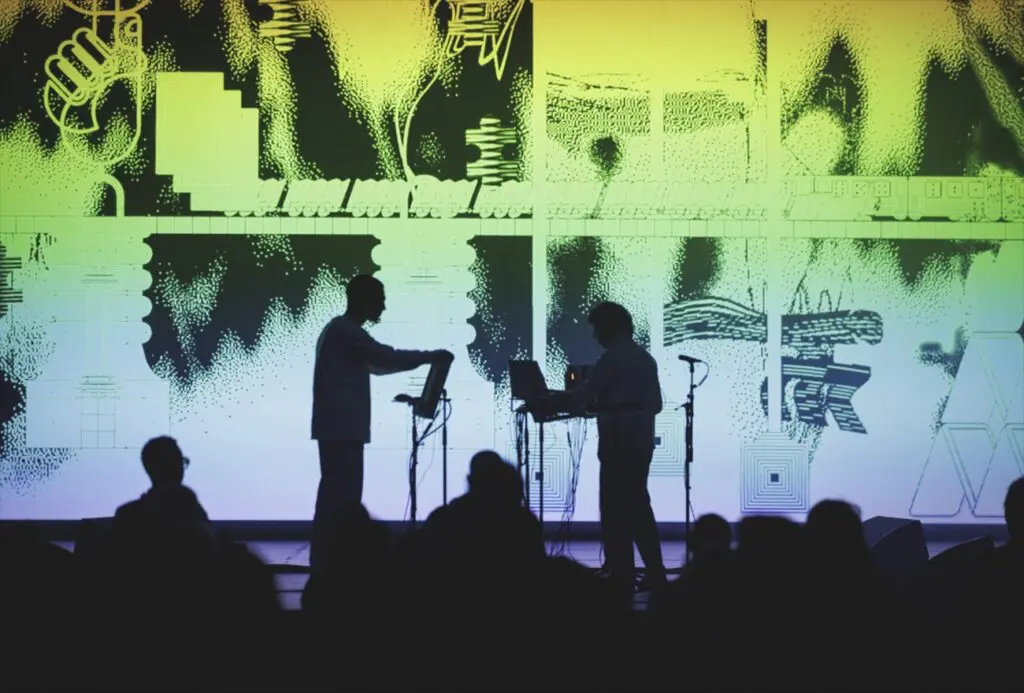
Projection mapping software live refers to specialized tools used during real-time performances to map visuals onto stages, set pieces, DJ booths, and architectural elements. Unlike offline projection mapping—which relies on pre-rendered content with fixed timelines and no improvisation—live projection mapping software supports on-the-fly adjustments, generative effects, and synchronization with audio and lighting systems.
Projection mapping software provides tools for mapping, content creation, and real-time adjustments, making it essential for executing projection mapping projects effectively. Key steps in projection mapping involve using software to warp and blend video content onto physical surfaces, creating interactive displays.
Typical use cases include:
- EDM festivals where multi-projector arrays cover massive stages
- Live band tours requiring set-piece mapping on drums, risers, or guitars
- Corporate events and touring theater with quick remapping during load-in
- Immersive club VJ sets blending video mixing with generative shaders
- Art installations that transition from scripted to improvised visuals
- Retail spaces transformed into immersive brand experiences through projection technology
- Healthcare environments where projection mapping enhances patient experiences by creating calming and therapeutic spaces
The terminology overlaps significantly. “Live visuals software” emphasizes real-time performance. “Concert visuals software” or “VJ software” focuses on stage reactivity. “Media server” denotes scalable hardware-software systems for larger rigs. Entry-level VJ apps target clubs, while pro media servers handle arenas.
What Makes the Best Projection Mapping Software Live?
When evaluating live projection mapping tools for concerts and touring shows, certain criteria are non-negotiable. The stakes are too high for compromise.
Core requirements:
- Unyielding stability under sustained GPU loads from 6+ simultaneous 4K layers
- Ultra-low-latency rendering below 16ms to sync visuals tightly with beats
- Efficient GPU memory management via optimized codecs like HAP or ProRes 422 HQ
- Built-in crash resistance through auto-recovery and lightweight engines
Essential live features:
- Real-time warping and masking with mesh-based deformation for irregular surfaces
- Multi-projector edge blending with gamma correction for seamless panoramas
- On-site surface remapping via camera calibration or manual keystone tools
- Robust cue management with clip triggers, layered timelines, and preset banks
Essential features of projection mapping software include 3D mesh warping, multi-projector blending, live parameter editing, and spatial calibration. Multi-projector support and edge blending are critical for large installations requiring multiple projectors to create a seamless, large image.
Performance inputs/outputs to verify:
- OSC for networked control from tablets or lighting desks
- MIDI for tactile fader/knob mapping on controllers
- Art-Net/DMX/sACN for integration with lighting consoles
- Timecode (LTC/MTC) for structured shows
- NDI for IP video over networks
- Syphon/Spout for GPU sharing between apps
Stability, GPU Management, and Crash Resistance On Stage
A software freeze mid-set in a 10,000-person arena costs thousands in lost momentum and damages professional reputations. This isn’t hypothetical—festival VJs have reported Resolume crashes mid-Coachella due to codec overload, forcing manual reboots while crowds watched blank screens.
Best practices:
- Run pre-show stress tests at 1.5x speed while monitoring GPU temps below 85°C
- Use frame rate overlays ensuring 58-60fps lock
- Choose optimized codecs like HAP Alpha for transparency without banding
- Leverage generative effects generating infinite variations from lightweight shaders
HeavyM’s engine is optimized to render over 100 built-in visual effects smoothly, dramatically reducing crash risk compared to setups relying exclusively on huge, compressed video files.
VJing Live vs. Pressing Play on a Timeline
True VJing means improvising—not pressing play on a pre-rendered timeline and hoping the DJ doesn’t change tempo. In a live DJ set, a VJ might warp visuals to match sudden BPM ramps from 128 to 140 using clip triggers and effect macros. During a guitar solo, they might intensify particle systems via MIDI faders responding to volume swells.
Surface mapping involves defining “slices” or masks for each part of the object to restrict video content to specific areas. Precise input masks ensure that content fits perfectly on complex 3D objects. This granular control is essential for live performances where set pieces change between songs.
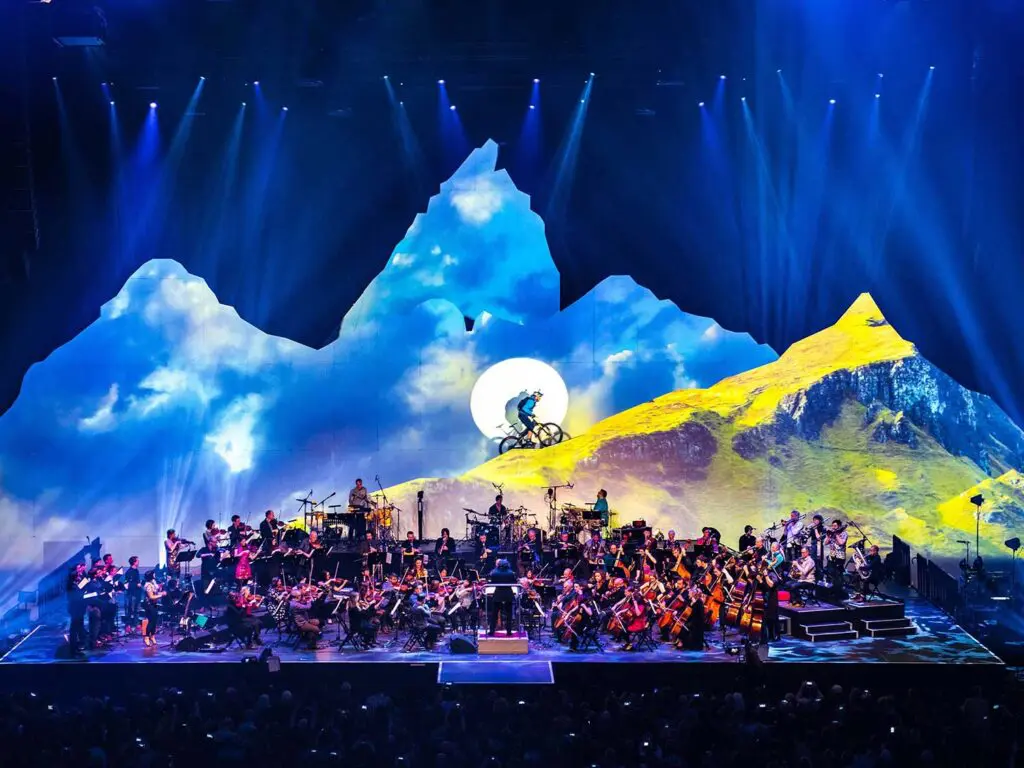
Projection mapping is widely used in theater to transform stages into immersive environments that captivate audiences. At EDM festivals and concerts, projection mapping elevates events with synchronized visuals that complement the music, creating unforgettable experiences.
HeavyM is designed for this improvisational workflow. Its intuitive drag-and-drop interface enables mid-song remapping of stage elements like LED screens or risers in seconds—perfect for soundcheck tweaks or adapting to unexpected creative demands.
Audio Reactivity: Visuals That Truly Follow the Music
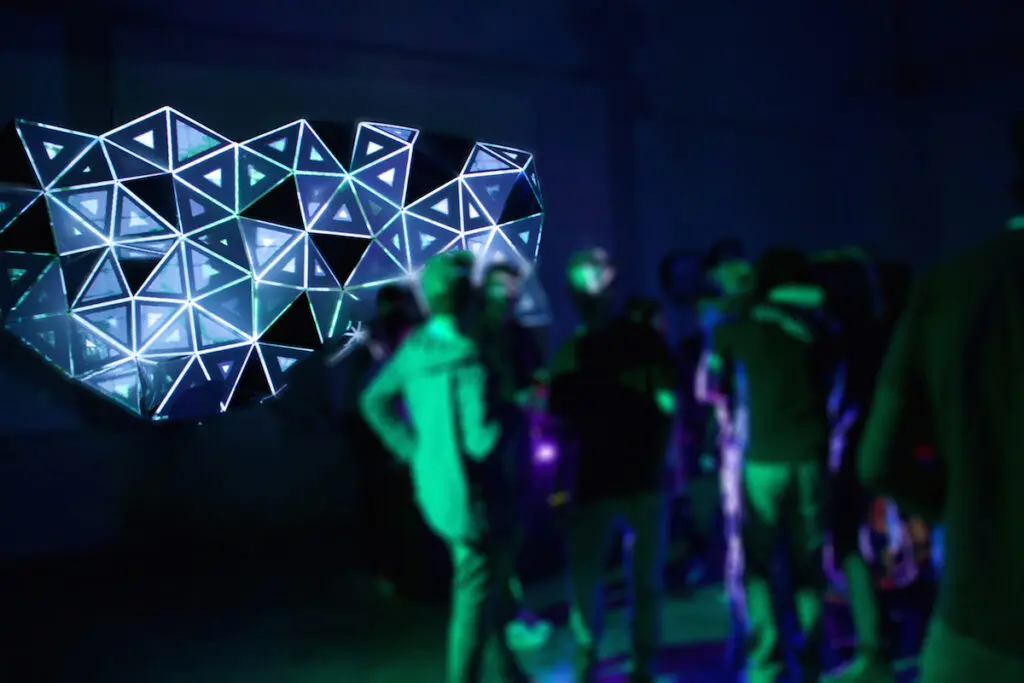
Audio-reactive visuals use FFT analysis to map frequency bands to visual parameters. Low-frequency bass (20-200Hz) can drive amplitude distortions. Midrange frequencies (200-2kHz) might shift colors. Transients trigger flash effects.
Real-time rendering and editing allows changes to visuals and mapping instantly without rendering, essential for live events. Many projection mapping tools offer real-time adjustments, allowing users to modify parameters and visuals on the fly during performances.
Common live applications:
- DJs where kick drums pulse fractal growth
- Live drummers with kick-triggered geometric explosions
- Vocal effects modulating glitch intensity
HeavyM offers plug-and-play real-time audio reactivity with no coding required. Simply select an audio input and the software performs instant beat detection accurate to 1/16th notes. Compare this to pre-rendered content that feels disjointed when DJs extend breakdowns or shift tempos unexpectedly.
How to Sync Concert Visuals Software with Live Music and FOH?
The Front of House (FOH) position coordinates audio, lighting, and now visuals during live performances. Visual operators must integrate smoothly with these teams to avoid conflicts and ensure cohesive shows.
Main protocols and signals:
- MIDI Clock for BPM sync
- OSC bundles for parameter automation (intensity faders, color shifts)
- Art-Net/DMX universes mapping LD cues to visual presets
- LTC/MTC timecode for structured shows
- Direct audio jacks from FOH mixer for reactivity
Lighting control, including dimming ambient light, is crucial for the success of projection mapping. A visual operator can follow a show caller’s cue sheet while still improvising within a safe structure. HeavyM supports OSC, MIDI, Art-Net/DMX, and Syphon/Spout natively, making it easy to slot into existing lighting and media workflows for crews of 2-5 people.
Integrating with Lighting Desks (Art-Net/DMX and Beyond)
Major lighting consoles like grandMA3, Avolites Titan, and ETC can control visual parameters via Art-Net/DMX, giving lighting designers unified show control.
Example workflow:
- An LD assigns DMX channel 100 at 100% to fire a fireworks effect during choruses
- Blackouts on channel 0 fade visuals to void
- Faders ramp opacity for builds
High-level setup steps:
- Assign Art-Net universe (e.g., Net 0 Universe 1)
- Map DMX channels to HeavyM parameters
- Run latency tests aiming for under 2ms via direct Ethernet switches
HeavyM’s Art-Net/DMX implementation is plug-and-play, auto-discovering consoles without custom nodes. This suits small crews without a dedicated programmer.
MIDI Controllers and VJ Performance Workflows
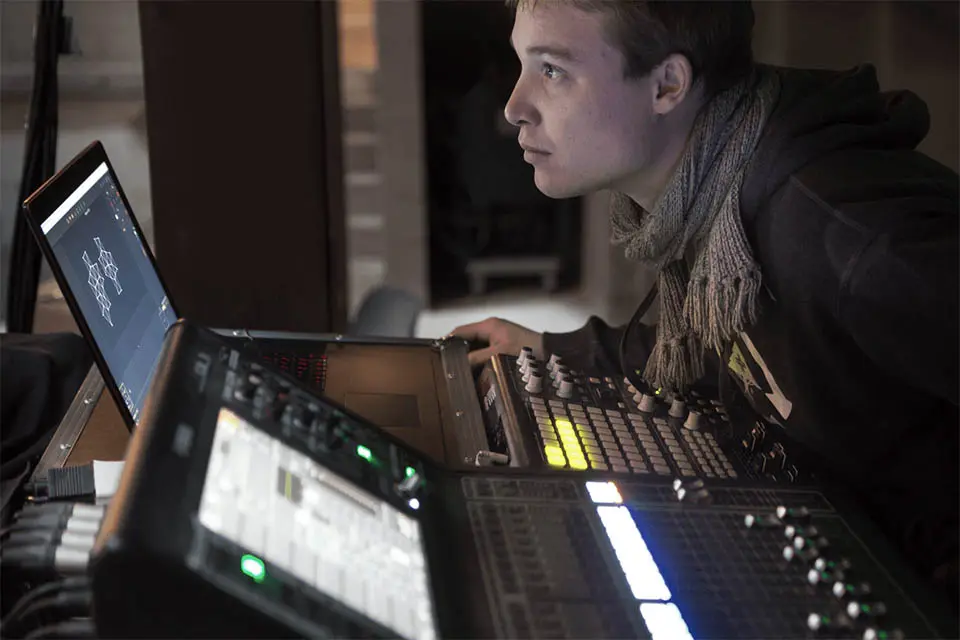
MIDI controllers like Akai APC40 MKII (8×8 pads, 16 faders), Novation Launchpad, or Korg nanoKONTROL2 enable VJs to “play” visuals like an instrument.
Typical mappings:
- Pad banks to clip launchers or scene triggers
- Faders to effect intensity or opacity
- Encoders to hue, saturation, or animation speed
HeavyM’s MIDI learn mode auto-assigns controls in seconds. Test all mappings during rehearsal to prevent misfires like accidental full-opacity blasts during quiet sections. The user interface makes rapid prototyping of control schemes straightforward.
Timecode and Structured Shows vs. Improvised Sets
Timecoded tours (think Taylor Swift’s Eras with fixed 2.5-hour sets) sync visuals to SMPTE for identical shows nightly. By contrast, improvised jam band concerts require flexible cues where operators react to musical moments.
HeavyM excels in semi-structured shows with timecode slaves plus manual overrides. For fully rigid 100-projector syncs with dedicated racks, stadium rigs like Disguise remain the standard. The software choice depends on your show’s structure and scale.
Comparing Live Visuals & Concert Projection Mapping Software
The live visuals ecosystem ranges from simple laptop setups in clubs to multi-million-dollar stadium rigs. Understanding where different tools fit helps you make informed decisions. Top live projection mapping software includes MadMapper, Resolume Arena, TouchDesigner, and HeavyM.
High-End Media Servers and Node-Based Systems (TouchDesigner, Disguise, etc.)
Node-based systems connect visual functions as flowcharts, enabling custom data pipelines, interactive sensor networks, and massive multi-output setups.
Capabilities:
- Custom Python shaders and sensor fusion
- 100+ simultaneous outputs
- Deep 3D workflows with broadcast-grade redundancy
- 3D scene calibration enabling alignment of 3D models with the physical space
Drawbacks for smaller teams:
- 6-month learning curves
- $50k+ hardware requirements
- Need for dedicated programmers
- Weeks of setup time
These systems excel for Super Bowl halftime shows with 50-node clusters, but represent overkill for 80% of gigs under 5,000 capacity.
Traditional VJ Software and Hybrid Tools
Traditional clip-based VJ tools excel at rapid video mixing, audio-linked parameters, and plugin ecosystems. MadMapper is a powerful video mapping projection software that allows users to map unlimited videos on any surface using as many projectors as their graphics card can handle.
However, some traditional tools optimize more for 2D screen shows than precise projection mapping on complex 3D set pieces. Many VJs now seek hybrid tools combining mapping, generative visuals, and live control instead of linking several apps together. Projection mapping can be performed on various surfaces, including irregular shapes, which enhances the creative possibilities for artists and designers.
Why HeavyM Is Ideal for Most Live Stage and Touring Contexts
HeavyM stands out as the ultimate live visuals platform for touring bands, independent VJs, and festival stage designers because it delivers professional rendering stability requiring absolutely no coding. Instead of allocating months to training technical engineers or scripting node graphs under pressure, users leverage an intuitive drag-and-drop interface to map physical stage structures and set pieces in minutes during tight load-ins. Once your canvas is calibrated, you can instantly run a dynamic show using over 100 built-in visual effects paired with native real-time audio reactivity for plug-and-play beat tracking accurate to 1/16th notes. This generative architecture guarantees that your show runs safely under a lightweight GPU load, all while offering flawless hardware synchronization with external lighting consoles via professional protocols including OSC, MIDI, Art-Net/DMX, Syphon/Spout.
Designing a Fail-Safe Live Projection Mapping Setup
Fail-safe design means planning so that even when something goes wrong, the audience doesn’t notice or the show recovers instantly.
Core fail-safe strategies:
- Dual laptops on Syphon failover
- Redundant HDMI/NDI outputs to switchers like Barco E2
- “Emergency” presets at 1080p/30fps with static gradients
- Conservative scenes using lighter GPU loads for worst-case scenarios
HeavyM’s low-complexity scenes ensure near-100% uptime on hardware that touring bands can actually afford and transport.
Optimizing Performance: Avoiding GPU Overload and Crashes
Setup and calibration of projectors aim to minimize shadows and cover desired surfaces effectively. Optimization extends beyond hardware placement to software configuration.
Optimization checklist:
- Use GPU-friendly codecs like HAP Q/Alpha for real-time multi-layer playback — they offload video decoding to the GPU, enabling smoother performance. Keep media on fast SSD storage.
- Cap textures at 2K where higher resolution isn’t visible to the audience
- Keep your GPU drivers up to date — they’re optimized for creative applications and improve stability
- Isolate effects one at a time when troubleshooting, and toggle audio reactivity on/off during tests
Latency and Signal Chain
Latency between audio, lights, and visuals breaks immersion, particularly in tight cue-based theater or dance shows.
- Mismatched 60Hz/50Hz configurations between your computer, projector, and software are a common source of dropped frames — match refresh rates across your entire setup
- Wireless links introduce unpredictable delays; prefer wired connections for live shows
- Capture cards (e.g. Blackmagic DeckLink) add 2–10ms of latency — factor this in when syncing visuals to audio or lighting
Pre-Show Checklist
- Check lens throw distances against your projector’s throw ratio specs before locking the rig
- Confirm MIDI response feels instantaneous during soundcheck
- Set audio input peaks around -6dB for reliable reactivity
- Create clearly labeled presets for each song or show segment
If Something Goes Wrong
Have a simple panic procedure ready: cut to a neutral output, reload your last stable preset, and if needed bypass one projector. Log any issues after each show — a short note goes a long way when you return to the same venue.
Getting Started with HeavyM for Live Projection Mapping
HeavyM represents the most practical starting point for serious beginners up to professional VJs and touring bands who need dependable concert visuals software without coding.
Quick-start workflow:
- Download HeavyM (30-day free trial available)
- Extend your projector as a second display via computer settings
- Auto-scan surfaces via webcam for calibration
- Drag built-in effects from the library onto your output layer
- Enable line-in audio reactivity, mapping bass to visual parameters
Once comfortable with basic mapping and video projections, experiment with MIDI controllers and Art-Net/DMX integration. The learning curve is gentle, but the creative possibilities are vast.
While massive stadium tours may choose complex media servers requiring large technical crews and months of setup, HeavyM covers the vast majority of live events—from 200-capacity clubs to midsize festivals—with an expert balance of reliability, creative power, and ease of use. The vision is simple: bring your creativity to life without worrying about crashes, limitations, or code.
Ready to Run a Rock-Solid Live Show?
Don’t let the fear of software freezes, frame drops, or complex media server timelines ruin the energy of your next performance. The best live visual experiences are created when the signal chain is rock-solid and the interface stays out of your creative way.
Stop clicking a mouse on complex interfaces and start performing your visuals like a true instrument. Download the HeavyM free trial today, connect your favorite MIDI controller, and ignite your stage setup tonight.