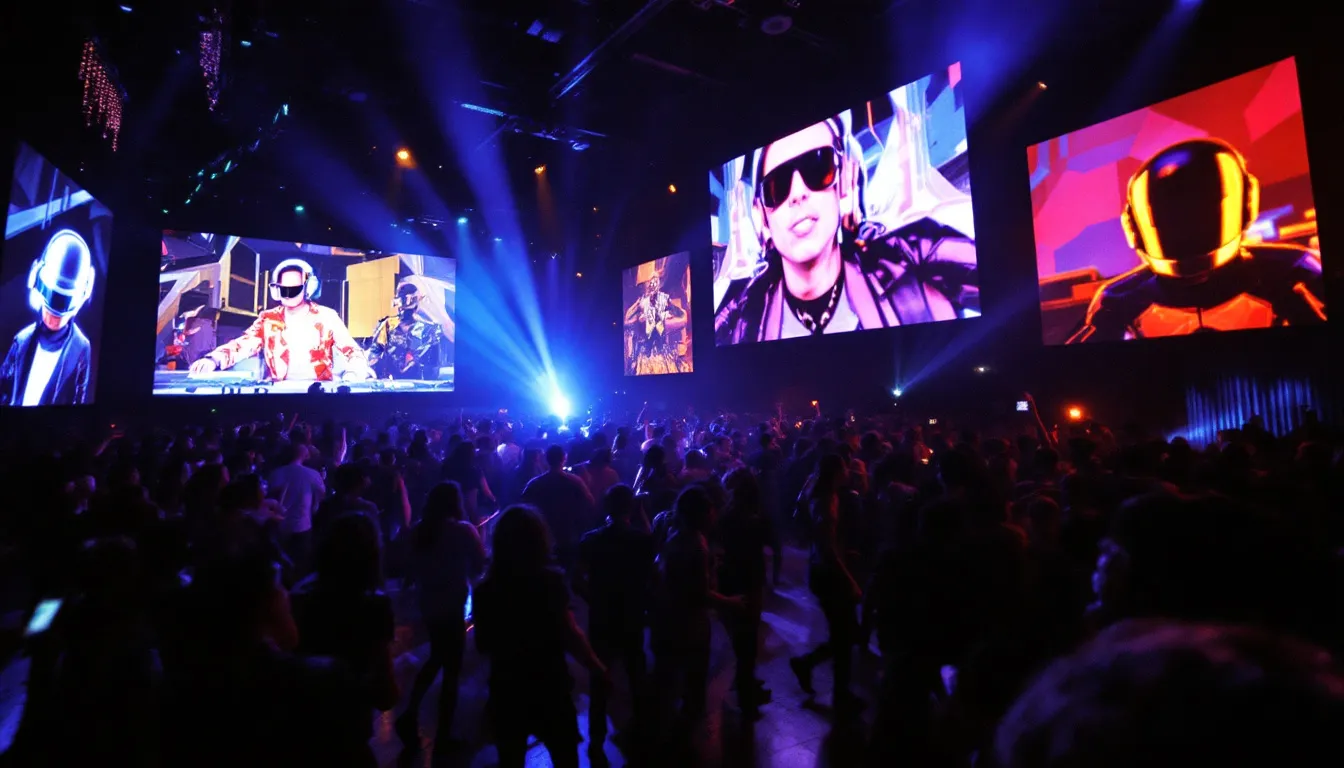
A video jockey (VJ) is a performer who synchronizes video content with music at live events such as nightclubs and music festivals. This article explores the role of a video jockey, the essential skills needed, various career opportunities, and salary expectations for those in the field.
A video jockey (VJ) creates engaging visual performances by synchronizing visuals with music and requires strong technical, creative, and communication skills.
An artistic representation of a video jockey at work, showcasing video content and equipment.
A significant aspect of a video jockey’s job is engaging with the audience, requiring quick thinking and adaptability. Whether performing at nightclubs, music festivals, or other live events, VJs must possess an entertaining personality, a sense of humor, and a strong presence of mind. Eloquent communication skills are crucial for maintaining the audience’s interest and creating a memorable experience, showcasing the importance of vj host personalities. A disc jockey must also embody these qualities to enhance the overall experience.
Aspiring video jockeys need to develop a combination of technical knowledge, creativity, and communication skills to thrive in their roles. These skills form the foundation for a successful career in the VJ industry, enabling video jockeys to produce captivating visual performances that resonate with audiences.
Let’s explore these essential skills in more detail.
Successful VJs are those who continuously innovate and bring fresh perspectives to their visual art as visual artists.
Effective communication and public speaking skills are essential for engaging audiences during live shows and show production. Video jockeys must be able to articulate their ideas clearly and interact with the audience to create a connection. Good voice modulation is crucial for maintaining audience interest and ensuring that the performance remains captivating.
Collaborating with other performers, such as DJs and musicians, can introduce additional complexities that require effective communication. VJs must be able to coordinate seamlessly with these artists to ensure a smooth and cohesive performance. Excellent communication skills enable VJs to manage these interactions and deliver a memorable experience for their audiences.
A collage of iconic moments in VJ culture, featuring music videos and live performances.
The rise of digital technology in the 1990s revolutionized VJing by introducing software that allowed for more complex and interactive visual displays. This technological advancement enabled VJs to create intricate visual narratives and synchronize them with electronic dance music and other genres. The integration of multimedia art and performance art further enriched VJ culture, emphasizing the fusion of different sensory experiences. The term ‘VJing’ became popular with the rise of MTV’s Video Jockey.
Video jockeys have a wide range of career opportunities within the entertainment industry. From performing at nightclubs and music festivals to working on television and online platforms, the possibilities are vast. The ability to adapt and perform in diverse environments enhances a VJ’s career potential, paving the way for advanced roles and specializations.
Let’s explore these career paths in more detail.
Aspiring video jockeys can start their careers at regional TV channels or through less popular music channels. Gaining real-world experience is crucial for entry-level positions, allowing VJs to hone their skills and build confidence. Working on shows with less viewership provides valuable opportunities to experiment and develop a unique style.
Creating a diverse portfolio of video content is essential for attracting potential clients and securing gigs. Aspiring VJs should showcase their creativity and technical proficiency by producing a variety of visual content that highlights their versatility. This portfolio serves as a powerful tool for marketing themselves to event organizers and production companies, including videos.
As video jockeys gain experience, they can explore advanced career opportunities in related fields. Experienced VJs can transition into roles such as production, writing, and event management, leveraging their skills to take on more responsibilities. Specializing in these areas allows VJs to expand their career horizons and take on leadership roles within the industry.
Maintaining good relationships with clients is crucial for success in advanced roles. Understanding client needs and delivering performances that exceed expectations can lead to more successful collaborations and repeat business. Experienced VJs who excel in client relations are more likely to secure high-profile gigs and lucrative opportunities.
The salary of a video jockey can vary significantly based on experience, skills, and market demand. Entry-level positions typically offer an annual salary range between $19,000 to $34,000, with an average of approximately $23,600. However, as VJs gain experience and popularity, their earning potential can increase substantially.
In India, entry-level video jockeys typically earn between INR 180,000 and INR 240,000 per year. This salary range reflects the earnings for those at the beginning of their careers in this field. VJs who build a strong reputation and become sought-after performers may command higher fees for their services.
The demand for skilled VJs in the entertainment industry continues to grow in recent years, offering promising career prospects.
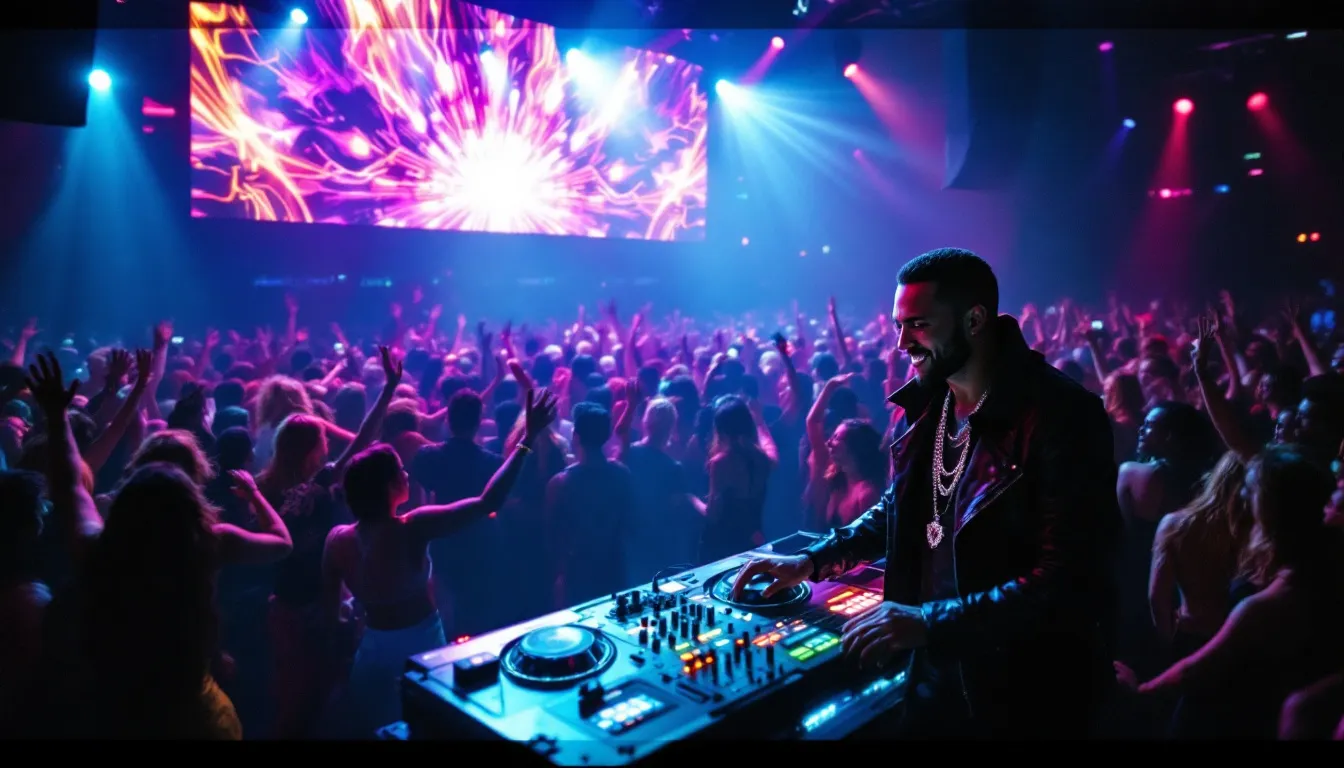
A vibrant dance floor scene with a video jockey mixing videos and music.
Off-camera activities play a significant role in a video jockey’s full time job. These tasks include theme and set designs, content development, script writing, and music selection. VJs must invest time and effort in preparing for their performances to ensure a high-quality show. Physical fitness is also important, as the job often requires long hours and late-night events.
Cultivating a vibrant atmosphere on the bar and dance floor is a key responsibility for VJs. Blending video clips, stock footage, and live camera feeds allows VJs to craft visually stunning performances that captivate audiences and enhance the overall club ambiance in the video lounge. This ability to transform a venue with visual art is what sets successful VJs apart in the industry, reflecting the essence of club culture.
Tools and technology used by video jockeys, including video mixers and multiple monitors.
A video jockey stands in front of multiple monitors displaying vibrant music videos and visual art, creating an engaging atmosphere on a dance floor during a live performance.
Aspiring video jockeys can set themselves up for success by continuously enhancing their technical skills and staying updated with the latest trends in music videos, music television, and visuals. Networking with musicians and participating in local events can lead to valuable opportunities and collaborations. Building a strong professional network is essential for gaining exposure and establishing a reputation in the industry.
Effective presentation is vital for engaging audiences and creating memorable performances. VJs should focus on being entertaining and engaging, using their charisma to connect with the audience and enhance the overall experience. Honing skills and maintaining a professional attitude helps aspiring VJs carve out a successful career in the industry.
Video jockeys often face the challenge of keeping their skills updated due to the rapid evolution of technology in visual effects and mixing tools. Staying ahead of technological advancements is crucial for delivering cutting-edge performances that captivate audiences. VJs must invest time in learning new software and techniques to remain competitive in the industry.
Engaging and retaining audience participation attention during performances is another common challenge for VJs. Creating an immersive experience that resonates with diverse audience expectations requires creativity and adaptability. Additionally, the physical demands of performing live, including long hours and the need for stamina, can be particularly taxing for video jockeys.
The journey of a video jockey is one of creativity, technical prowess, and engaging performances. From understanding the role of a VJ and developing essential skills to exploring career opportunities and overcoming challenges, aspiring video jockeys have a wealth of knowledge to navigate. The evolution of VJ culture and the tools and technology at their disposal offer endless possibilities for creating captivating visual art.
For those passionate about blending music with visuals and creating immersive experiences, a career as a video jockey can be incredibly rewarding. By continuously honing their skills, staying updated with industry trends, and building strong professional networks, aspiring VJs can thrive in this dynamic and exciting field.
To become a successful video jockey, mastering technical proficiency, fostering creativity in visual arts, and honing excellent communication skills are essential. These skills enable effective engagement with the audience and enhance the overall viewing experience.
Video jockeys have diverse career opportunities in nightclubs, music festivals, television, and online platforms, with advanced positions available in production, writing, and event management. This versatility allows for growth and specialization within the entertainment industry.
VJ culture has evolved significantly from the liquid light shows of the 1960s to the contemporary integration of digital technology and multimedia art, influenced by key figures such as Merrill Aldighieri and Rick Moranis. This transformation highlights the dynamic nature of visual performance art throughout the years.
Video jockeys commonly face challenges such as the need to stay updated with rapidly evolving technology, engaging and retaining audience attention, and managing the physical demands of live performances. Adapting to these factors is crucial for maintaining their effectiveness in the role.