
Projection Mapping Trends: From Pre-Rendered Clips to Real-Time, Interactive Worlds
Projection mapping technology has evolved from static building facades into dynamic canvases that respond to music, movement, and data in real time. In this guide, you’ll discover how these shifts are reshaping live events, immersive art, and stage design—and how modern tools are making these innovations accessible to creators without programming backgrounds.
TL;DR
Between 2016 and 2026, projection mapping has rapidly shifted away from static, pre-rendered videos toward real-time generative visuals and interactive environments that respond instantly to music and audience movement. Until recently, keeping up with these trends required mastering complex programming environments like TouchDesigner or hiring expensive specialists to write custom code. Today, modern no-code software empowers creators of all skill levels to build future-proof, interactive setups using intuitive interfaces and built-in effects, democratizing cutting-edge spatial storytelling for everyday events.
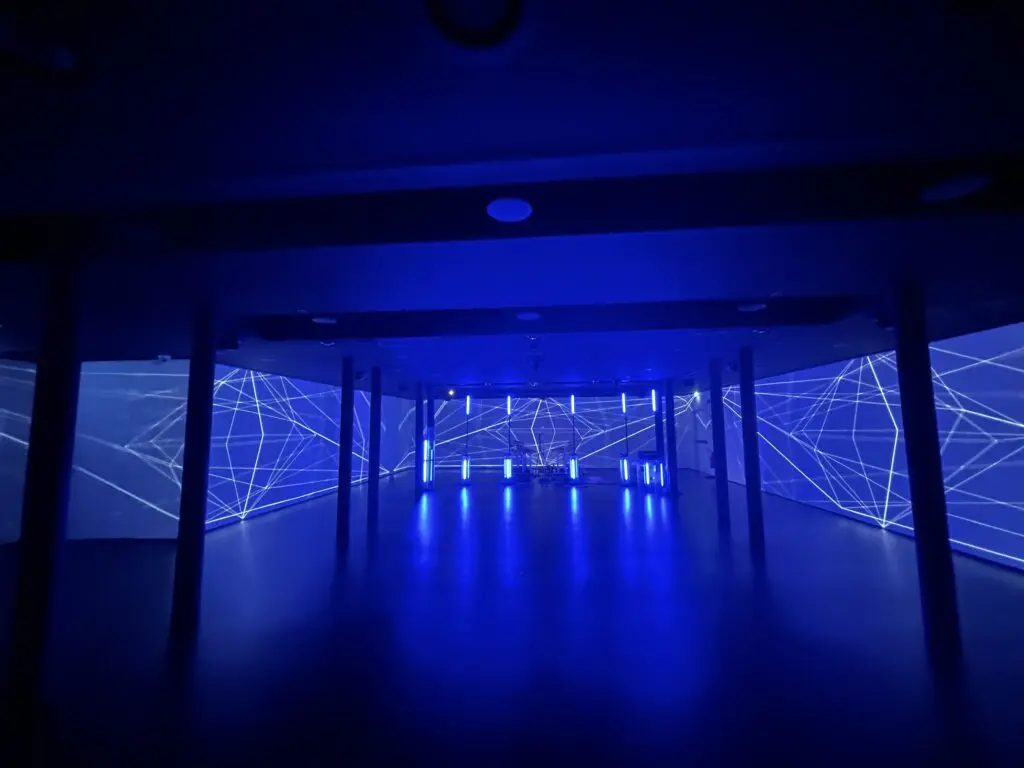
What Are the Latest Projection Mapping Trends in 2025–2026?
According to Grand View Research, the projection mapping market was valued at USD 3.2 billion in 2021 and is projected to reach USD 8.0 billion by 2030, growing at a CAGR of 10.9%. This expansion is driven by increasing demand across live events, entertainment, and permanent installations. The Asia Pacific region leads market growth at 12.1% CAGR, while the 4D segment is the fastest-growing dimension type at 14.7% CAGR.
Several key trend lines are reshaping how creators approach projection mapping systems:
- Real-time generative engines replacing pre-rendered video files
- Interactive sensors including depth cameras, LiDAR, and gesture-tracking IR
- Hybrid LED and projection stages combining pixel-perfect brightness with organic textures
- Spatial augmented reality blending digital overlays onto physical environments
- AI-assisted creation for pattern generation and automated alignment
- No-code mapping software democratizing access for non-programmers
- Permanent installations in museums, hotels, and retail flagships
The growth of immersive art spaces since 2020—from Van Gogh exhibits drawing millions globally to touring festivals demanding flexible content—reflects how brand activations now prioritize updateable immersive and interactive experiences over fixed timelines. The sections below unpack how these trends reshape workflows for live events, immersive art, theater, and corporate events.
From Pre-Rendered 3D Loops to Real-Time Generative Content
The traditional workflow involved creating 100% pre-rendered 3D animations in tools like Cinema 4D or After Effects, then exporting them as fixed video files requiring hours or days of offline rendering. These files often consumed gigabytes per minute of content and locked creators into a specific visual narrative that couldn’t adapt to live conditions.
Workflow Shift: Pre-Rendered vs. Real-Time Generation
| FEATURE | TRADITIONAL PRE-RENDERED WORKFLOW | MODERN REAL-TIME GENERATIVE WORKFLOW |
|---|---|---|
| Content Creation | Weeks of 3D modeling and offline rendering | Instant visual generation via software engines |
| Adaptability | Fixed timeline, cannot change during the show | Reacts instantly to live music and sensor data |
| Required Skills | Advanced 3D animation (Cinema 4D, After Effects) | Visual operation (No coding or 3D modeling required) |
| Ideal Use Case | Highly scripted stadium pop tours | Festivals, interactive art, responsive corporate events |
The 2024–2026 shift moves toward visual engines generating imagery in real time, reacting to music, movement, or data feeds instead of following a fixed timeline. This approach enables infinite variations without re-rendering and supports the endless possibilities of responsive stage design.
No-code tools like HeavyM match this shift perfectly. With over 100 built-in generative effects—including procedural shaders for fluids and particles—real-time parameter control, and instant editing on-site, creators can adjust visuals during soundcheck rather than spending weeks in post-production.
Concrete use cases include:
- A DJ set in Berlin where visuals follow BPM and frequency bands via spectrum analysis
- A theater production where projected images change each night based on actor positioning
- A public art installation visualizing live city weather data on building facades
Benefits extend beyond creative process improvements: shorter production cycles (days instead of months), sustainable touring setups with lighter media servers, and easier last-minute client changes. While this style of workflow traditionally depended on complex environments like TouchDesigner or Unreal Engine, HeavyM offers similar real-time flexibility with no coding required.
How Is Real-Time Generative Content Changing Live Events?
Festivals, concerts, and clubs are moving to fully live visual sets instead of looping content, especially post-2023 as audience expectations for “unique nights” have intensified. The competitive landscape now demands that no two performances look identical—a fundamental shift in how event organizers approach visual experiences.
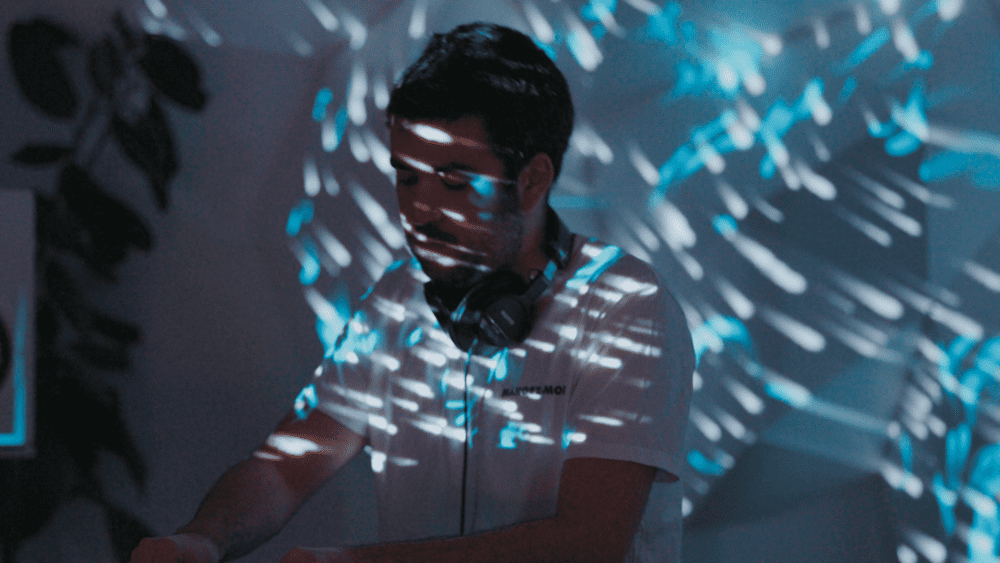
Specific production changes include:
- VJs performing live generative visuals rather than triggering pre-made clips
- Shows that adapt to crowd energy through real-time data processing
- Scenography that responds to live musicians via audio input
- Parameter tweaking via OSC/MIDI controllers during performances
HeavyM’s real-time engine, highly responsive real-time audio reactivity, and drag-and-drop effects let non-programmers build these setups quickly. For corporate events and product launches, reactive stage backdrops can morph with applause levels. For experiential marketing campaigns, generative visual art walls in networking lounges react to ambient noise, creating immersive visual experiences that boost engagement.
Performance reliability and low latency are crucial—targeting under 50ms for seamless reactivity. HeavyM visuals update instantly when parameters are adjusted, making it suitable for tightly timed cues and improvisation during live events.
Interactive Projection Mapping: Letting Audiences Control the Visuals
Interactive projection mapping transforms ordinary surfaces into responsive canvases where visuals react to people’s movement, gestures, touch, or mobile devices rather than playing passively. This approach creates interactive experiences that forge emotional connection between audiences and digital content.
Typical sensor setups in 2025–2026 include:
- Depth cameras (Microsoft Kinect(s), Orbbec, etc) for body and hand tracking
- LiDAR for precise spatial awareness
- Infrared motion sensors for large-scale detection
- Pressure-sensitive floors for step-based triggers
- Smartphones as controllers or position trackers
Advanced interaction has historically required coding in environments like Unity or TouchDesigner, wiring up OSC/MIDI logic manually. HeavyM can now receive sensor, MIDI, and OSC data without coding, letting creators link movement, buttons, or sliders directly to visual parameters via the interface.
Practical scenarios include:
- Experiential retail windows where passersby trigger visual bursts on static surfaces
- Museum pieces where children “paint with light” on projection surfaces
- Corporate booths where tablet inputs alter 3D product models in real time
Interactive walls and floors generate shareable content for social media, extending experiential marketing beyond the physical environment. Observations suggest interactive installations can achieve 3x higher dwell time compared to passive displays.
Immersive 360-Degree Environments and Spatial Augmented Reality
The rise of 360-degree and room-scale projection since 2020 has redefined how audiences experience immersive environments. Popular “immersive Van Gogh”-style exhibits and multi-projector domes have demonstrated the power of transforming static surfaces into compelling stories that surround viewers completely.
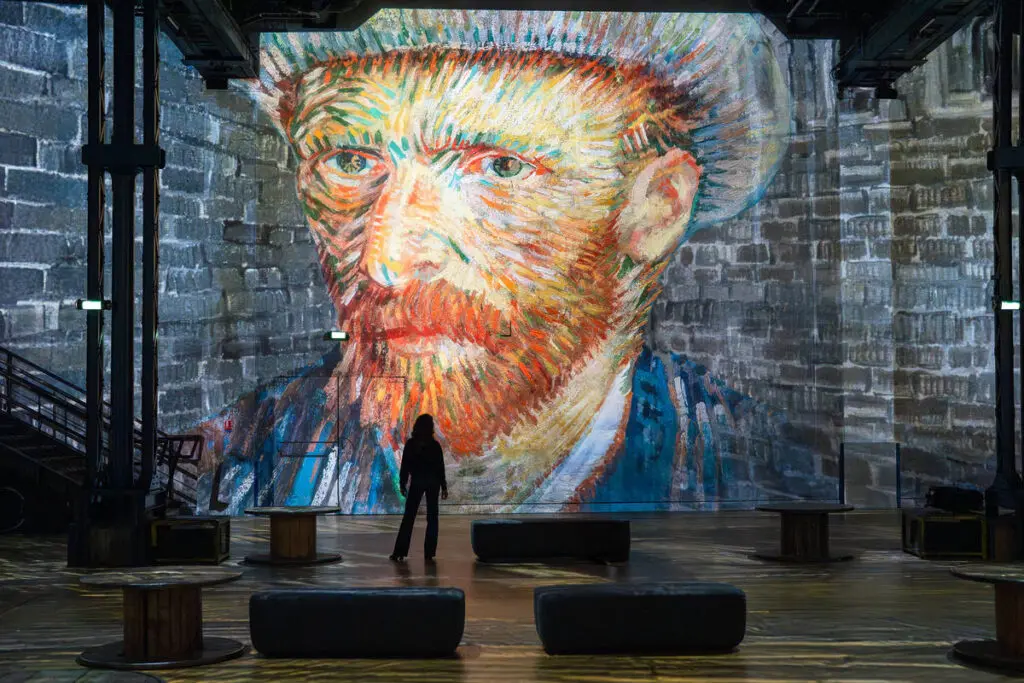
Spatial augmented reality—sometimes called augmented reality AR—involves blending digital layers onto real architecture, sets, and objects so that virtual and physical worlds feel seamlessly integrated. This approach supports spatial storytelling by enabling artists to create immersive experiences that blur the boundary between real and digital.
Typical spaces include:
- Mirrored warehouses creating infinite-room illusions
- Cylindrical projection rooms and domes
- LED plus projection hybrid stages
- Theater stages with fully mapped walls, floors, and scenic pieces
Think beyond flat walls: projection on furniture, sculptures, and architectural details can build immersive storytelling without rebuilding the venue—transforming ordinary surfaces into dynamic displays.
The Convergence of Projection Mapping, LED Walls, and Stage Lighting
The 2023–2026 period has seen hybrid stages where projection mapping, LED walls, moving lights, and lasers form a single synchronized visual ecosystem. This convergence is standard in arenas, touring shows, esports events, and high-end corporate productions where LED provides brightness and projection technology adds texture and flexibility.
Specific design patterns include:
- LED back walls with projection on scenic elements
- Floor projection combined with LED arches
- Mapped scenic pieces tracking color palettes with stage lighting
- DMX-synced color schemes across all visual elements
Achieving this integration traditionally required multiple specialists and custom show-control code linking media servers, lighting consoles (like grandMA3), and projection mapping systems. Hardware for large-scale projections has become more accessible and affordable, but software integration across systems remains challenging.
HeavyM serves as a hub-friendly tool with support for Art-Net/DMX, OSC, MIDI, and Syphon/Spout, allowing it to sync with lighting consoles, audio software, sensors, and other visual engines. For a product reveal, lighting cues, LED animations, and mapped motion graphics can all follow the same timecode with HeavyM generating live reactive layers over pre-composed content—achieving seamless integration across all systems.
AI, Data, and the Next Wave of Projection Mapping Innovation
AI and data-driven visuals are becoming mainstream in projection projects by 2025, particularly for personalized and adaptive visual narrative experiences. Tools like Stable Diffusion for pattern generation and RunwayML for storyboards are automating aspects of the creative process that previously required extensive manual work.
AI assists in content creation by:
- Generating patterns, textures, or visual storyboards
- Automating masking and precise alignment
- Optimizing shows for different complex surfaces
- Enabling artists to iterate faster on concepts
Real-time data visualization allows projections to respond to live metrics—social media sentiment, environmental data like weather and air quality, or business KPIs during conferences. This creates vivid visuals that adapt to context rather than following static timelines.
Heavy-duty AI pipelines typically run in the background while projection-mapping software like HeavyM acts as the presentation layer, remixing and sequencing visuals in real time. Workflows where designers generate content with AI tools, then import and combine it with HeavyM’s generative effects and audio reactivity, create richer hybrid shows.
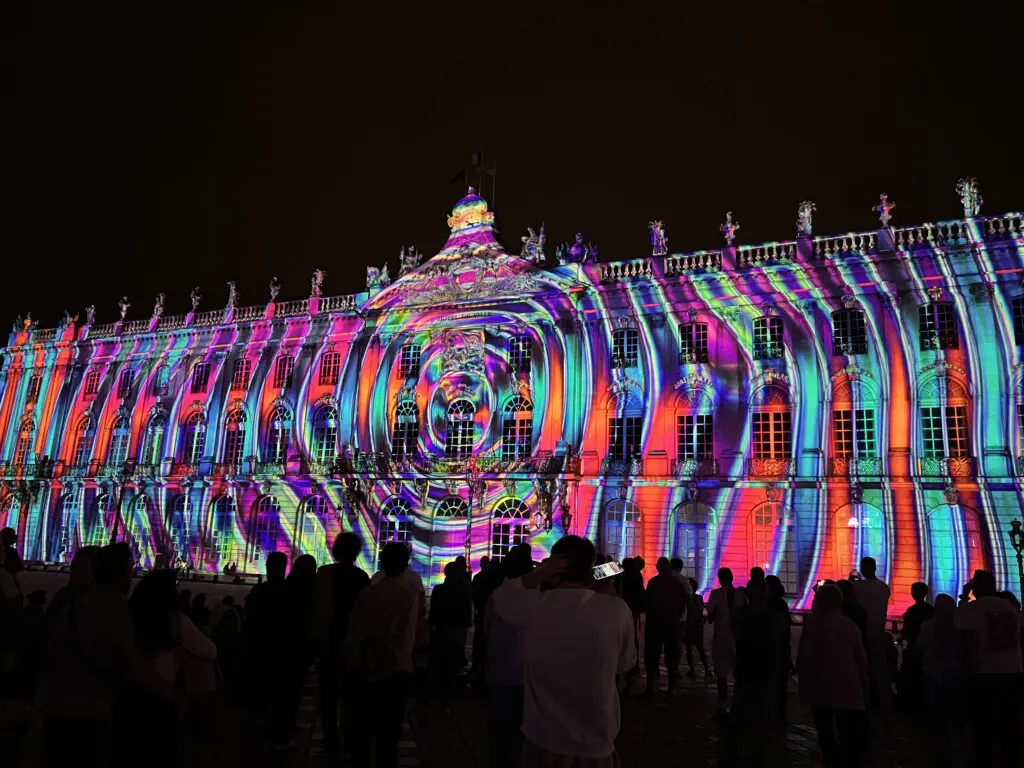
Plan future-proof workflows that can ingest new data sources and content types as AI capabilities expand—this flexibility represents key factors for long-term success.
Permanently Installed Projection Mapping and Venue Upgrades
Growing demand between 2022 and 2026 has established permanent or semi-permanent projection installations in museums, retail flagships, hotels, and entertainment venues. Unlike one-off shows, these interior spaces require systems that can operate reliably over years while supporting regular content updates.
Benefits of permanent installations include:
- Seasonal content updates without physical rebuilds
- Recurring themed nights with different visual experiences
- Better ROI compared to single-use event environments
- Reduced high initial investment over time through content flexibility
Typical setups feature ceiling or wall projectors embedded into architecture, hidden digital projection on sculptures, projection-enhanced lobby features, or interactive corridors. Requirements include stable playback, easy remote control, content scheduling, and fast updates when experiential marketing campaigns change.

HeavyM can serve as a long-running engine for these venues, combining a library of generative visuals, scheduled playlists, and interactive triggers via OSC/MIDI/sensors. Design flexible visual systems that evolve over several years—this approach delivers energy efficiency compared to rebuilding physical décor repeatedly.
Why No-Code, Creator-Friendly Tools Are Critical for Future-Proof Projection Mapping
Many cutting-edge trends—interactivity, real-time generative visuals, sensor integration—have been pioneered in code-heavy environments that are powerful but difficult to learn. TouchDesigner may requires node-based GLSL shader programming. Notch demands HLSL particle expertise. Unreal Engine involves Blueprints or C++ development.
These tools often require months or years of technical training. Event agencies, venues, and independent artists increasingly need:
- Faster setups with smaller teams
- Tools that designers—not just developers—can operate confidently
- Flexible installation options that don’t require ongoing programmer support
HeavyM represents the ultimate solution for digital artists, event planners, and serious beginners who want to embrace these advanced capabilities with absolutely no coding. Through its intuitive drag-and-drop interface, creators can map complex architectural surfaces in minutes and immediately deploy over 100 built-in visual effects that compute efficiently on the fly.
HeavyM Features That Align with Today’s Projection Mapping Trends
HeavyM’s capabilities map directly onto major industry trends, enabling creators to implement cutting edge technology without programming backgrounds.
FEATURE | INDUSTRY TREND ADRESSED |
|---|---|
Real-time generative engine | Shift from pre-rendered to live content |
100+ procedural effects | Infinite variations without re-rendering |
Audio reactivity | BPM-locked morphing for music-driven shows |
OSC/MIDI support | Interactive sensor connectivity |
Art-Net/DMX | Lighting and AV convergence |
Syphon/Spout | Integration with other visual tools |
Polygonal/bezier warping | Complex surface mapping |
The real-time generative engine means built-in effects are procedural, can be layered, and respond instantly to parameter changes. Audio reactivity allows users to plug in a DJ mixer, live band feed, or background playlist and have visuals automatically pulse and evolve to frequency bands—enabling artists to create immersive experiences effortlessly.
Interactive connectivity via supported protocols enables integration with sensors, lighting consoles, and controllers without writing code. Quick polygonal mapping, bezier warping, and reusable templates simplify projection on 3D objects, stage sets, or complex interiors.
Practical Use Cases: How Creators Are Applying These Trends with HeavyM
Translating abstract trends into concrete projects helps illustrate the technological advancements reshaping the industry.
Music Festivals: Generative stages where visuals react to live DJ sets via audio input, transforming static surfaces into dynamic canvases that never repeat.
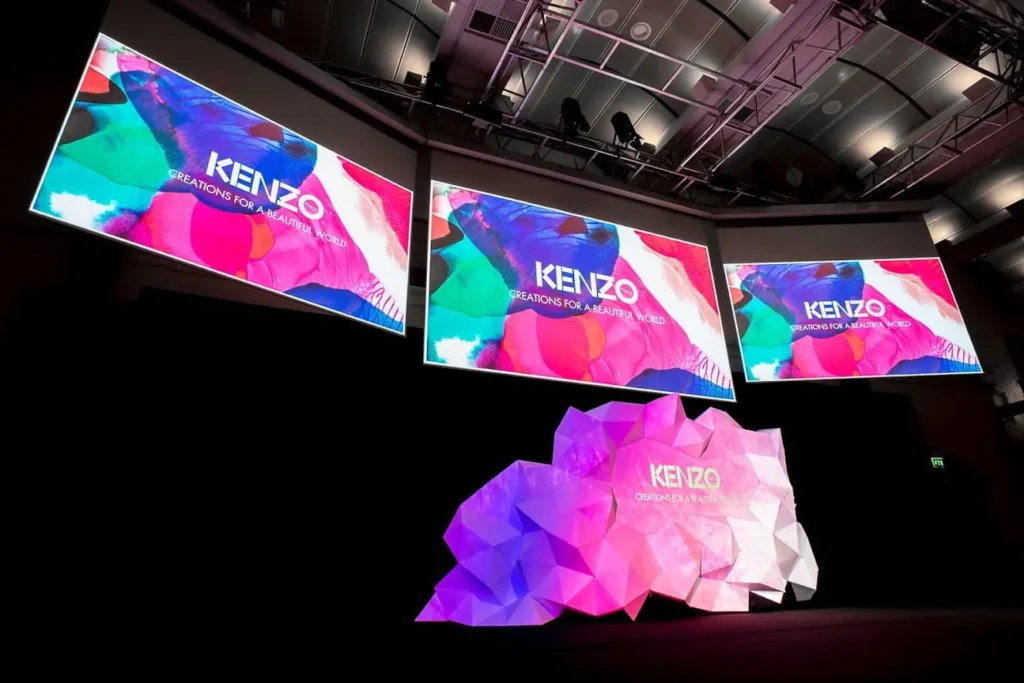
Corporate Events: Interactive brand storytelling where attendee choices via tablets alter projected visuals on product displays, creating segment growth in engagement metrics.
Museums: Educational immersive rooms where projected images respond to visitor movement, enabling interactive environments for learning.
Retail: Dynamic window displays triggered by passerby motion, supporting advertising sectors with attention-grabbing video projection.
Nightlife: Responsive club décor where ambient audio drives visual changes across physical spaces.
A 2025-style activation concept: a pop-up immersive room where visitors choose themes via a tablet, and HeavyM instantly switches mapped scenes and color palettes across all projection surfaces. This approach supports VR projection mapping concepts where virtual reality principles apply to physical environments.
Frequently Asked Questions About Projection Mapping Trends
Is pre-rendered content still relevant in 2026? Yes, for bandwidth-limited situations, archival purposes, or specific artistic choices. However, real-time generative content is rapidly becoming the standard for dynamic displays and live events where projection mapping reduces production cycles.
Do I need to learn to code to use real-time generative visuals? No. With HeavyM, you can create modern generative and interactive experiences using drag-and-drop tools and protocol support. No computer science degree required.
How expensive is it to add interactivity to an existing setup? Adding sensors typically adds $5-20k depending on scale, but ROI scales significantly through engagement metrics and social media shareability. The projection mapping market size reflects growing accessibility.
What hardware do I need for real-time visuals? Mid-range GPUs (RTX 40-series minimum for 4K at 60fps) or recent Apple Silicon MacBooks (M2 Pro or higher recommended for 4K workflows) and appropriate projectors for your venue size.
What’s the learning curve for no-code mapping software? HeavyM typically requires 1-2 weeks to learn versus months for code-based alternatives. The intuitive interface supports serious beginners.
Can I scale from single to multi-projector setups? Yes. Start with audio-reactive effects on one projector, then expand to sensor-driven interactivity and multi-projector edge-blending as projects grow.
How do I integrate with existing lighting systems? HeavyM supports Art-Net/DMX protocols, allowing direct connection to lighting consoles for synchronized shows—creating interactive installations where all elements work together.
Final Thoughts: Embrace the Future of Spatial Design
The era of passive, pre-rendered projection mapping is ending. Audiences now expect living, breathing environments that react to their presence and the energy of the room. Transitioning to this new standard doesn’t require a computer science degree or an enterprise-level budget; it requires the right agile tools.
Don’t let complex programming environments lock you out of the industry’s most exciting trends. Download the HeavyM free trial today, connect your projector, and discover how quickly you can transform any space into a real-time, interactive world.