

Comment les technologies immersives transforment les expositions
En bref : pourquoi le vidéo mapping est-il important pour les musées ?
Les musées passent rapidement d’expositions statiques présentées dans des vitrines à des expériences interactives de réalité augmentée en espace, afin de répondre aux attentes des visiteurs d’aujourd’hui et d’accroître considérablement l’engagement du public dans les salles d’exposition. Le principal défi pour les concepteurs d’expositions consiste à trouver des outils de projection fiables et durables, capables de projeter des images sur des objets complexes et de s’intégrer à des capteurs interactifs sans nécessiter de budgets d’ingénierie colossaux. En utilisant des logiciels intuitifs tels que HeavyM, les institutions culturelles peuvent éviter les difficultés liées à la mise en place de programmes, animer sans effort des lieux historiques et proposer des récits immersifs et multisensoriels qui laissent un souvenir inoubliable.
Qu'est-ce que le « vidéo mapping » dans les musées ?
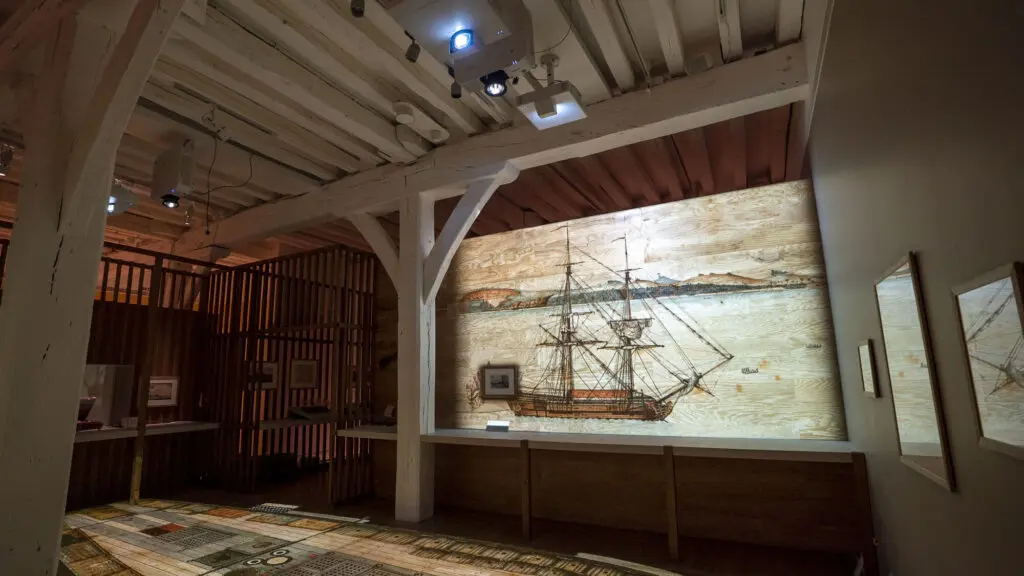
Le vidéo mapping, également appelé “ réalité augmentée spatiale ”, consiste à projeter des images alignées avec précision sur des surfaces non planes telles que des façades de bâtiments, des sculptures, des maquettes ou des murs aux formes irrégulières. Contrairement aux écrans plats ou aux murs vidéo LED qui cantonnent le contenu à des cadres rectangulaires, le vidéo mapping « enveloppe » le récit autour de l'architecture et des objets physiques existants, créant ainsi l'illusion que les surfaces elles-mêmes se transforment ou prennent vie.
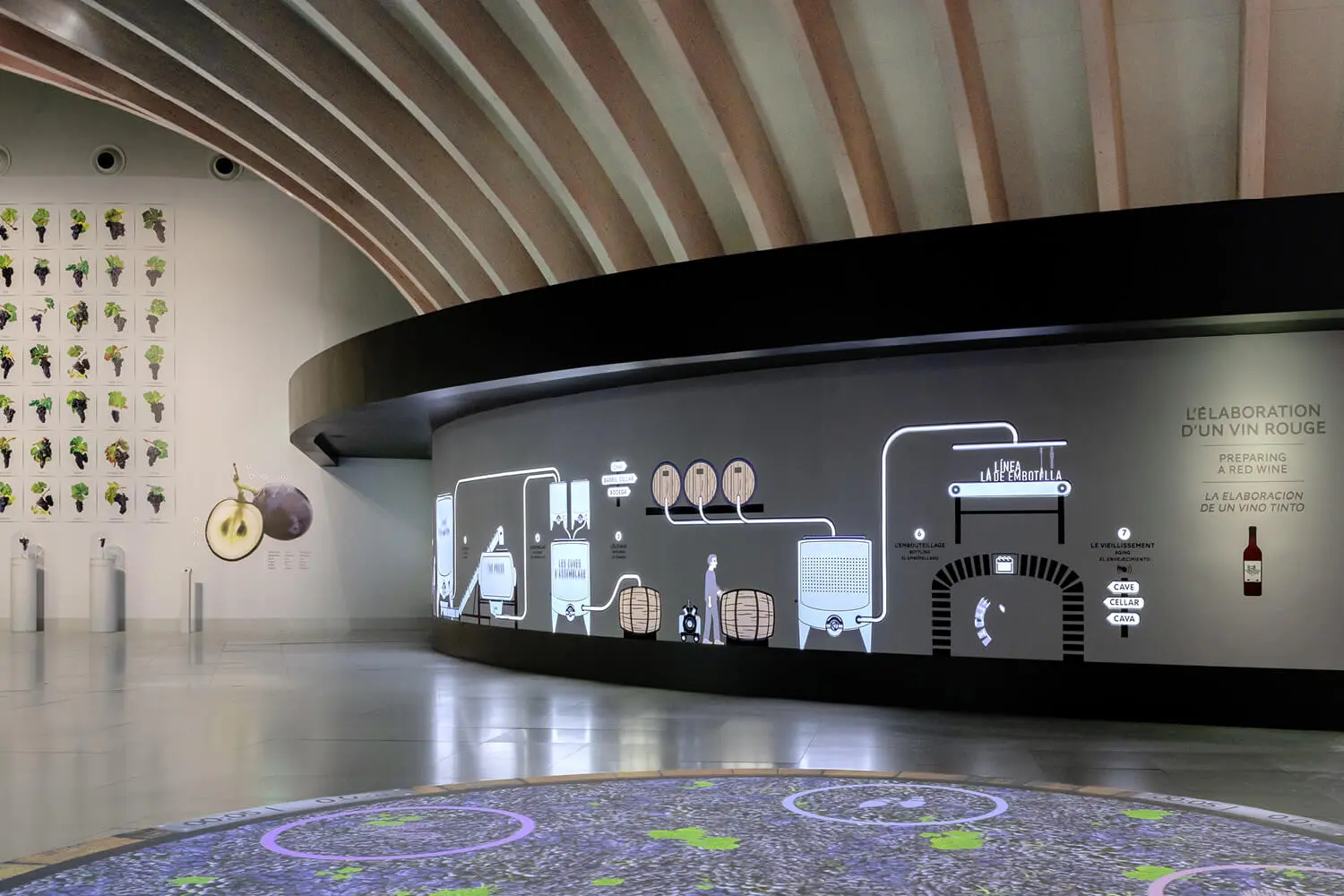
Cette technologie de projection permet une mise en valeur non destructive des objets du patrimoine et des intérieurs d'époque. Les musées peuvent ainsi donner vie à des personnages historiques sur des modèles en trois dimensions, reconstituer des éléments architecturaux disparus sur les remparts d'une forteresse ou projeter des visualisations interactives de données sur des pièces d'exposition fragiles, le tout sans rien altérer physiquement.
L'histoire de cette technologie remonte aux premières illusions créées dans les parcs d'attractions dans les années 1960, notamment la « Haunted Mansion » de Disney, avec ses effets « Pepper's Ghost » et ses apparitions fantomatiques projetées. Au cours des années 2000 et 2010, les progrès réalisés en matière de luminosité et de résolution des projecteurs, ainsi que les logiciels de rendu en temps réel, ont transformé cette technologie en un outil sophistiqué au service des institutions chargées du patrimoine culturel. Les Musées du Capitole à Rome utilisent désormais la projection pour animer des sculptures antiques et raconter le mythe fondateur de Rome, tandis que le palais de Kensington projette sur ses murs des registres virtuels du personnel de maison afin de recréer des environnements historiques.
L'histoire de cette technologie remonte aux premières illusions créées dans les parcs d'attractions dans les années 1960, notamment la « Haunted Mansion » de Disney, qui a été l'une des premières à utiliser des astuces optiques pour créer des environnements immersifs. Au cours des années 2000 et 2010, les progrès réalisés en matière de luminosité et de résolution des projecteurs, ainsi que les avancées des logiciels de rendu en temps réel, ont transformé le vidéo mapping en un outil sophistiqué au service des institutions du patrimoine culturel, permettant aux musées et aux sites historiques d’animer des surfaces architecturales, de donner vie à des récits historiques et de superposer du contenu numérique à des espaces physiques d’une manière jusqu’alors impossible.
Dans la conception d'expositions contemporaines, le vidéo mapping s'associe à la conception sonore, à un éclairage dynamique et à une scénographie subtile pour créer des récits multisensoriels qui vont bien au-delà de ce que permettent les présentations traditionnelles.
En quoi le « vidéo mapping » transforme-t-il les musées ?
Les musées connaissent actuellement une profonde mutation : ils passent des vitrines statiques, des textes explicatifs et des dioramas des XIXe et XXe siècles à des environnements immersifs du XXIe siècle, qui répondent aux attentes des visiteurs en matière d'interactivité et d'émotion.
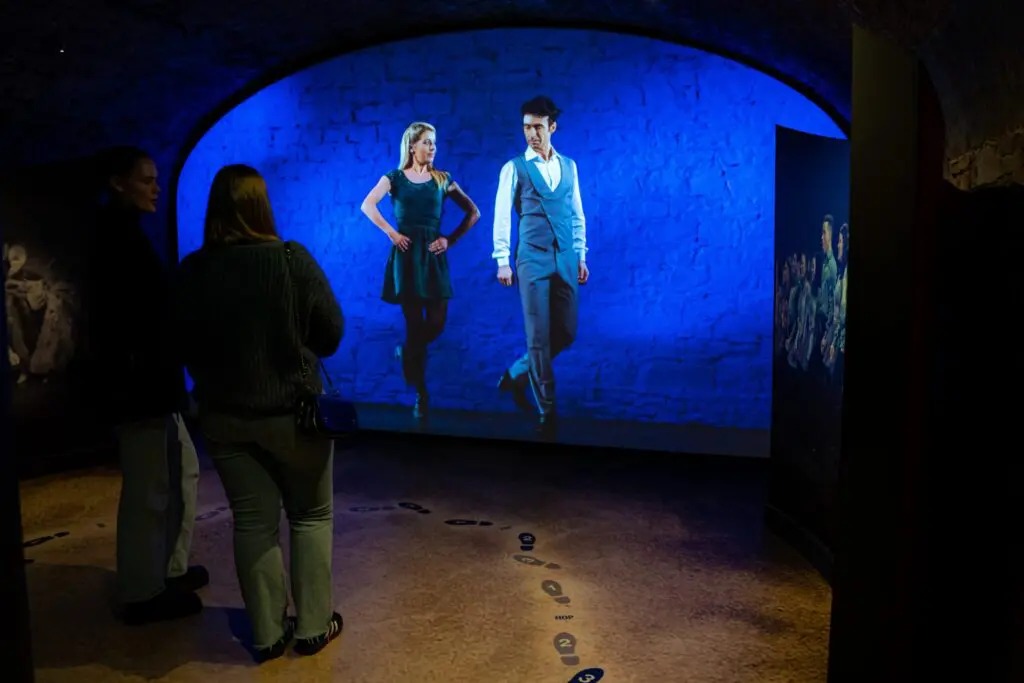
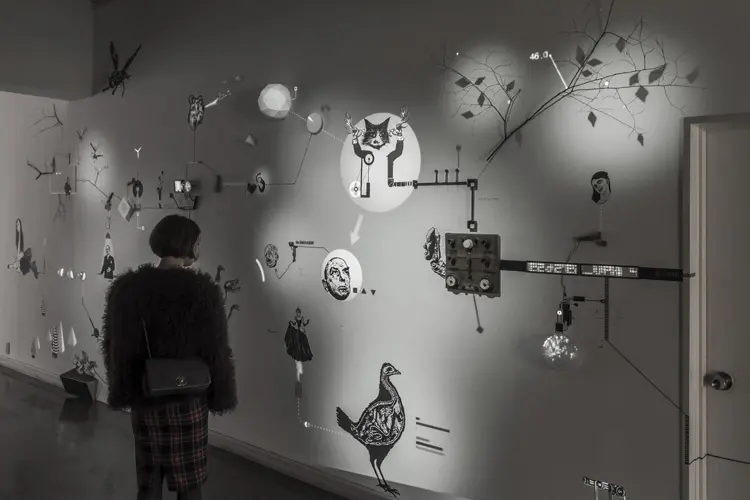
EPIC, le musée de l'émigration irlandaise situé à Dublin et inauguré en 2016, illustre parfaitement cette transformation. Le musée utilise la vidéo mapping sur des murs spécialement peints pour transformer les récits d’émigration en parcours visuels continus, éliminant ainsi les coupures imposées par les écrans et permettant une mise à jour flexible des contenus. Cette approche a valu à EPIC le prix de la meilleure attraction touristique d’Europe pendant trois années consécutives (2019, 2020 et 2021).
De même, l’exposition ’ teamLab Borderless », inaugurée en 2018 au Musée d’art numérique du Mori Building à Tokyo, utilise la technique du « vidéo mapping » associée à des lumières LED, des capteurs et des effets sonores sur une superficie de 10 000 mètres carrés. Cela permet de créer des écosystèmes numériques permanents et entièrement interactifs, où les mouvements des visiteurs influencent une infinité d’œuvres d’art lumineuses — attirant plus de 2,3 millions de visiteurs par an à son apogée.
Principaux avantages des expositions basées sur la projection
- Un engagement émotionnel plus profond: Des études menées sur des installations immersives font état d'une augmentation de 30 à 50% de la durée de visite et des taux de mémorisation des visiteurs pour des sujets complexes
- Meilleure mémorisation des récits à multiples facettes: Les visiteurs retiennent mieux les évolutions du changement climatique, les flux migratoires et l'évolution urbaine grâce à une narration immersive
- Optimisation de l'utilisation de l'espace: Les projections à l'échelle de la pièce permettent de réutiliser de manière dynamique les éléments architecturaux fixes, optimisant ainsi l'espace au sol limité
- Amélioration non invasive: Les objets fragiles sont préservés tout en s'enrichissant de multiples niveaux contextuels
Exemples concrets tirés de la pratique
- Un musée municipal européen met en valeur une maquette urbaine du XIXe siècle à l'aide de cartes historiques illustrant l'évolution des quartiers de 1850 à nos jours
- Un centre scientifique asiatique projette des données planétaires sur un dôme, permettant ainsi aux visiteurs d'explorer la dynamique du système solaire grâce à des effets visuels réagissant aux mouvements.
- Un musée d'histoire locale utilise des projections à l'échelle d'une pièce pour présenter des récits oraux, avec des images et des animations qui s'adaptent aux témoignages enregistrés.
Ces exemples montrent comment la vidéo mapping transforme des galeries permanentes en espaces évolutifs, axés sur un récit, sans qu'il soit nécessaire de refaire la scénographie physique.
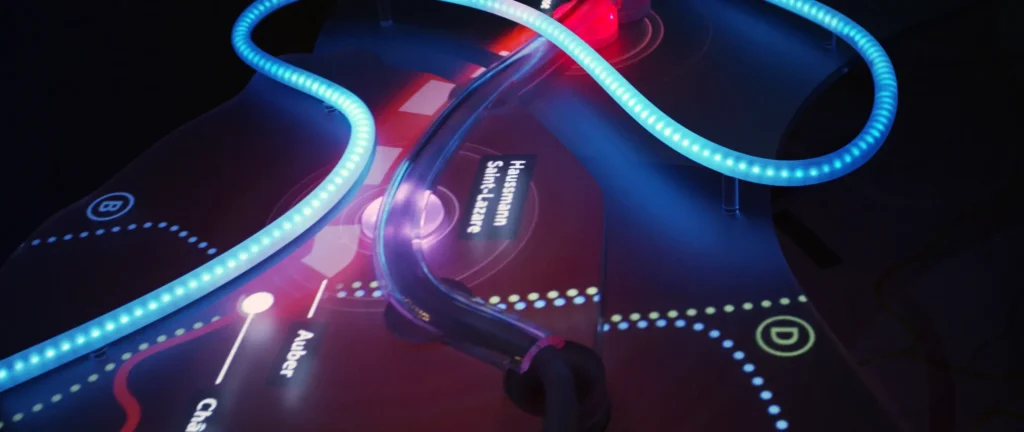
Espaces d’art immersifs et patrimoine numérique : tendances actuelles
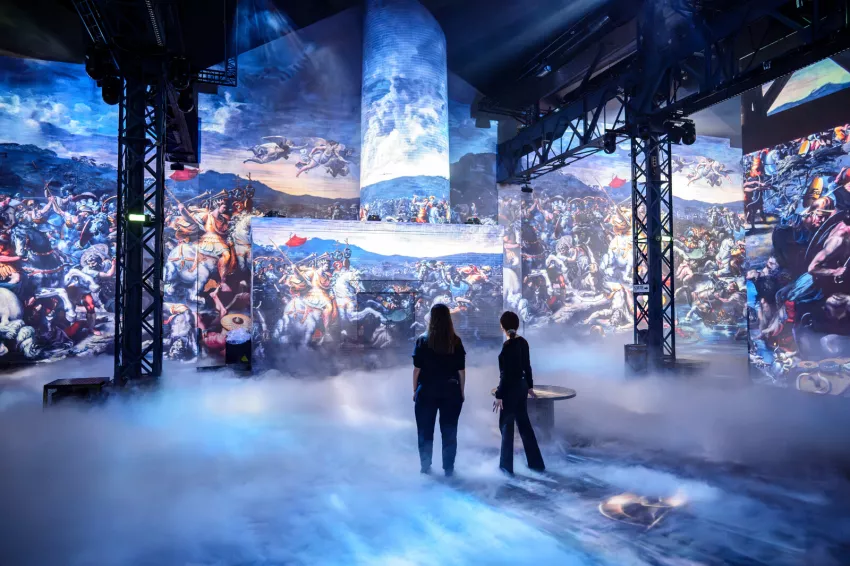
Au cours de la dernière décennie, on a assisté à l'émergence de musées d'art numérique spécialement conçus à cet effet et de “salles immersives” au sein des lieux culturels traditionnels. Cela s'inscrit dans une tendance plus large visant à faire de la réalité augmentée spatiale une stratégie d'interprétation centrale.
Atelier des Lumières À Paris, ce lieu inauguré en 2018 dans une ancienne fonderie projette des expériences immersives d’une grande envergure, inspirées de l’histoire de l’art, sur 3 300 mètres carrés de murs et de sols à l’aide de 33 projecteurs laser. Les expositions consacrées à des artistes tels que Van Gogh attirent 500 000 visiteurs par exposition. Par ailleurs, teamLab Borderless a rouvert ses portes à Azabudai Hills en 2024 après avoir fermé son site d’origine à Tokyo en 2022, ce qui témoigne d’une demande soutenue pour ces expériences immersives.
Dans le domaine du patrimoine, la vidéo mapping permet de reconstituer de manière animée des architectures disparues, des scènes de la vie quotidienne ou des événements historiques, tout en préservant le tissu architectural d'origine. Les intérieurs de cathédrales, les sites archéologiques et les remparts peuvent ainsi présenter des simulations de leur passé sans aucune intervention physique.
Principales tendances qui façonnent le secteur
- Récits fondés sur des données: Données environnementales en temps réel, trafic maritime et tendances de croissance urbaine intégrées dans les projections
- Une expérience narrative immersive à l'échelle de la pièce: Des espaces entiers se transforment en écrans, plongeant les visiteurs au cœur d'un récit
- Spectacles itinérants immersifs: Des expositions inspirées de L’Atelier des Lumières s'adapter aux sites industriels pour des présentations temporaires
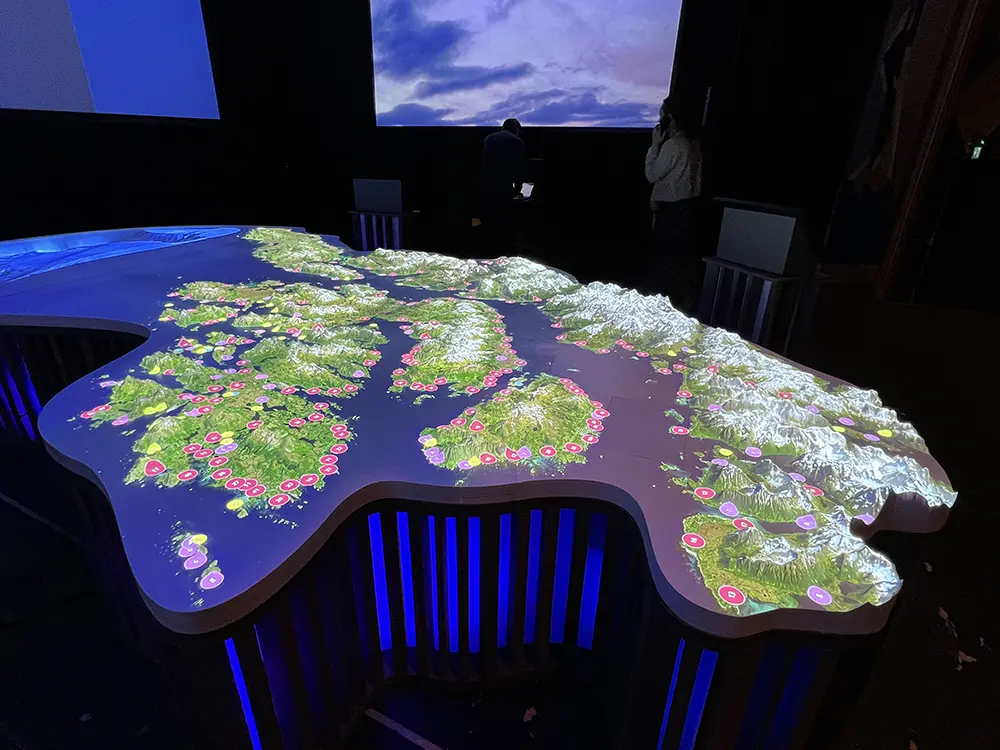
- Modèles géographiques haute fidélité: L'installation « Gaia System » du musée de Sortland, en Norvège (2022-2023), présente une maquette physique de 2,7 × 5,2 mètres sur laquelle sont superposées des projections en temps réel du trafic maritime et des données environnementales.
- Interactivité fusionnée avec des capteurs: Le contrôle multi-utilisateurs et le contenu génératif optimisé par l'IA deviennent la norme
- Superpositions en réalité augmentée hybride: Associer le vidéo mapping à la réalité augmentée mobile pour une narration à plusieurs niveaux
En quoi l'interactivité renforce-t-elle l'engagement des visiteurs ?
Le vidéo mapping gagne considérablement en puissance lorsqu'il est associé à capteurs et écrans interactifs. Les visiteurs passent ainsi du statut de spectateurs passifs à celui de participants actifs qui contribuent à façonner leur expérience.
Parmi les types de capteurs couramment utilisés dans les installations muséales, on trouve notamment les caméras infrarouges de détection de mouvement, les capteurs de profondeur détectant les gestes, les tapis de sol sensibles à la pression enregistrant les pas, les étiquettes RFID intégrées aux billets pour proposer un contenu personnalisé, les écrans tactiles permettant une interaction directe, ainsi que des objets tangibles dotés de repères de position suivis sur des surfaces de projection.
Le système Gaia illustre une conception interactive sophistiquée. L’utilisation tactile multi-utilisateurs sur le modèle de 2,7 × 5,2 m déclenche des changements narratifs : les visiteurs peuvent zoomer sur des itinéraires de pêche, activer des simulations climatiques ou explorer des animations historiques de la région des Vesterålen. Dans des musées d’art tels que teamLab Borderless, le suivi des mouvements du corps modifie les coups de pinceau projetés en fonction des déplacements. Les centres scientifiques pour enfants utilisent le geste de la main pour faire apparaître des habitats d’animaux sur les murs, rendant ainsi l’apprentissage dynamique et mémorable.
Avantages concrets de l'engagement
- Augmentation du temps passé dans la galerie: Les expositions interactives permettent aux visiteurs de passer plus de temps sur le stand 40-60% que les expositions statiques
- Un attrait pour toutes les générations: Les taux de satisfaction de la gamme 75%, mesurés dans le cadre de sondages interactifs, témoignent d'une grande accessibilité
- Accompagnement flexible pendant le circuit: Convient aussi bien aux visites libres qu'aux visites guidées par un guide
- Amélioration de la mémoire spatiale: Les visiteurs retiennent mieux la mise en page et le contenu après avoir vécu des expériences participatives
- Une dynamique de groupe améliorée: Les groupes scolaires et les familles participent ensemble, en discutant et en faisant des expériences ensemble
Ces avantages font de la vidéo mapping interactive un outil particulièrement précieux pour les institutions qui cherchent à renforcer l'implication de leurs visiteurs, tous publics confondus.
Matériel : de quoi les musées ont-ils besoin pour le vidéo mapping ?
Robuste, matériel fiable est essentiel pour les installations muséales de longue durée, qui peuvent fonctionner entre 8 et 12 heures par jour, 6 à 7 jours par semaine, pendant plusieurs années d'affilée.
Éléments à prendre en compte concernant les projecteurs
- Source lumineuse: Les projecteurs à laser et phosphore offrent une durée de vie de 20 000 à 30 000 heures, contre 2 000 heures pour les lampes, ce qui réduit considérablement les besoins en maintenance
- Luminosité: 5 000 à 20 000 lumens pour compenser l'éclairage ambiant de la galerie, avec pour objectif d'obtenir des rapports de contraste compris entre 100 et 500 lux
- Résolution maximale: Full HD pour une couverture étendue ; 4K pour les détails fins, comme les animations d'inscriptions ou les images en haute résolution d'œuvres d'art
- Options d'objectifs: Objectifs à focale ultra-courte (rapport de projection de 0,3:1) destinés aux installations où l'espace est limité et où les projecteurs doivent être placés à proximité des surfaces
Matériel auxiliaire
- Lecture multimédia: PC industriels équipés d'un système de stockage RAID pour un fonctionnement 24 h/24, 7 j/7
- Systèmes de fixation: Système de suspension sur mesure avec amortissement des vibrations pour les zones sismiques
- Protection de l'environnement: Boîtiers étanches à la poussière (indice de protection IP54) destinés aux environnements difficiles
- Matériel audio: Dispositifs sonores synchronisés pour des expositions multisensorielles
- Capteurs: Caméras de mouvement, écrans tactiles, tablettes de commande en réseau intégrées via Ethernet
Exigences en matière de fiabilité
Les expositions permanentes et semi-permanentes nécessitent une surveillance à distance via SNMP, un accès aisé pour la maintenance, une infrastructure électrique et réseau standard, ainsi que des stratégies de secours comprenant des alimentations redondantes (configurations N+1) et des projecteurs de secours.
Logiciels : des serveurs des grands musées aux outils accessibles
Certains méga-musées et expositions universelles s'appuient sur des systèmes de serveurs multimédias extrêmement complexes et développés sur mesure pour réaliser des installations à grande échelle couvrant plusieurs bâtiments. Les festivals de vidéo mapping organisés à Berlin depuis 2005, ou encore le spectacle “ Reflections ” projeté sur la façade du Guggenheim de Bilbao en 2017, ont nécessité l’utilisation de multiples projecteurs de vidéo mapping 4K synchronisés, de flux de contenu sur mesure et de équipes d’ingénieurs spécialisés.
Ces configurations sur mesure, qui utilisent des plateformes telles que Modulo PI ou Watchout, peuvent coûter plus de $1M pour le développement et plus de $100K par an pour la maintenance. Ces coûts dépassent souvent le budget et les capacités en personnel des musées régionaux et des petites institutions qui ne disposent pas de programmeurs en interne.
Comparaison récapitulative : logiciels de projection pour musées
| DOSSIER | SERVEURS MULTIMÉDIA D'ENTREPRISE SUR MESURE | LOGICIELS PROFESSIONNELS ACCESSIBLES (HeavyM) |
|---|---|---|
| Cas d'utilisation typique | Méga-musées, expositions universelles, immenses façades extérieures | Musées régionaux, salles d'immersion, expositions interactives |
| Compétences requises | Programmeurs spécialisés en audiovisuel et ingénieurs informatiques | Conservateurs, artistes numériques, concepteurs d'expositions |
| Budget / Coût | $100K+ : investissement initial élevé, frais d'entretien annuels élevés | Licence commerciale standard très avantageuse |
| Flux de travail du contenu | Des semaines de rendu 3D complexe | Prototypage rapide avec effets génératifs intégrés |
La plupart des musées ont besoin d'un peu de nouveauté: des outils à la fois robustes et faciles à prendre en main, que les équipes de conservateurs, de concepteurs d'expositions et d'artistes numériques peuvent utiliser sans formation technique approfondie.
Principales fonctionnalités logicielles que les musées devraient rechercher
- Outils de mapping de surface précis: Déformation quadruple, correction trapézoïdale, fusion des bords pour les formes complexes
- Lecture basée sur la chronologie: Enchaîner les scènes et les animations avec précision
- Organisme de presse: Gérer efficacement les vidéos, les images et les contenus génératifs
- Effets visuels prédéfinis: Animations et déformations prêtes à l'emploi pour le prototypage rapide
- Fonctionnement stable: Des moteurs résistants aux chocs, conçus pour un fonctionnement quotidien de longue durée
- Prise en charge des protocoles: Intégration avec des capteurs (OSC, MIDI) et des systèmes d'éclairage (Art-Net/DMX)
- Acheminement vidéo: Siphon/bec verseur pour des flux de travail polyvalents
Un logiciel adapté permet de transformer un défi technologique complexe en un processus créatif accessible.
Quel est le meilleur logiciel de mapping pour les expositions interactives ?
Si les serveurs multimédias hautement personnalisés conviennent aux installations sur mesure de plusieurs millions de dollars, HeavyM constitue le choix idéal en matière de logiciel pour les concepteurs d'expositions, les artistes numériques et les commissaires d'exposition qui souhaitent créer efficacement des expositions interactives époustouflantes.
HeavyM exige absolument pas de programmation, en mettant l'accent non plus sur le dépannage technique, mais sur la narration historique et l'implication des visiteurs. Grâce à son interface intuitive de type « glisser-déposer », les équipes des musées peuvent rapidement mettre en évidence les détails architecturaux, les maquettes ou les objets fragiles, et appliquer instantanément plus de 100 effets visuels intégrés pour créer à la volée des prototypes d'environnements immersifs.
De plus, HeavyM donne vie aux œuvres exposées en proposant une qualité irréprochable réactivité audio en temps réel pour synchroniser les éléments visuels avec les ambiances sonores de l'exposition, tout en assurant une intégration poussée avec les capteurs interactifs du musée via OSC, MIDI, Art-Net/DMX, Syphon/Spout. Cela permet aux musées et galeries régionaux de proposer des expériences interactives complexes et multi-utilisateurs — où les mouvements des visiteurs déclenchent des réactions visuelles dynamiques — sans avoir à consacrer un budget d'ingénierie colossal. Il s'agit d'un outil polyvalent qui s'adapte aussi bien à un prototype rapide utilisant un seul projecteur qu'à des installations permanentes complexes faisant appel à plusieurs projecteurs.
Flux de travail type pour les conservateurs, les artistes numériques et les concepteurs d'expositions
Un projet de vidéo mapping dans un musée se déroule généralement en plusieurs phases : élaboration du concept et du scénario, prototypage, installation, tests, inauguration et maintenance à long terme. Voici comment se déroule chaque phase lorsque l'on utilise des outils tels que HeavyM.
Mise en œuvre par étapes
Concept et écriture du scénario Les commissaires définissent les récits : une histoire de la migration de 1845 à 2020, une chronologie du changement climatique de 1900 à 2100 ou encore l’évolution architecturale d’une ville. Les objectifs pédagogiques et la tonalité émotionnelle sont ainsi fixés. Cette collaboration entre les équipes de commissariat et de conception détermine tout ce qui va suivre.
Analyse spatiale Les concepteurs et les techniciens inspectent les lieux : dimensions des murs, hauteur sous plafond, niveau de luminosité ambiante. Ils identifient les surfaces à mapping — détails architecturaux, maquettes, structures autonomes — et répertorient les difficultés telles que les formes irrégulières ou les matériaux réfléchissants.
Création de contenu Les artistes numériques réalisent des animations, des boucles vidéo et des visualisations de données en accord avec les objectifs de la programmation. À l'aide de HeavyM’Grâce à ses outils de prévisualisation, ils testent les compositions par rapport à la structure de la surface du mapping avant même d’arriver sur place, ce qui permet de gagner un temps considérable lors de l’installation.
Mapping et étalonnage L'équipe utilise HeavyM’Les outils de glisser-déposer disponibles sur site permettent de faire correspondre des formes numériques à des surfaces réelles. La correction trapézoïdale, l’ajustement des courbes et la fusion des contours garantissent un alignement précis. Ce qui nécessitait autrefois l’intervention d’ingénieurs spécialisés est désormais à la portée d’équipes aux compétences variées.
Intégration de l'interactivité Les capteurs et les contrôleurs — caméras de suivi de mouvement, contrôleurs MIDI, interfaces OSC — se connectent à HeavyM. Celles-ci déclenchent des scènes, des effets ou des embranchements narratifs en fonction des actions des visiteurs. Ce processus ne nécessite aucune programmation, mais simplement une configuration au sein de l'interface.
Tests et itérations Le personnel pédagogique et des groupes de visiteurs testeurs font part de leurs commentaires. Le contenu est peaufiné pour s'adapter à la durée habituelle des visites et aux objectifs pédagogiques. Des ajustements du rythme permettent de s'assurer que l'expérience convient à des publics variés : enfants, adultes, touristes, groupes scolaires.
Fonctionnement et mises à jour Le personnel du musée organise quotidiennement des spectacles en intervenant le moins possible. HeavyM’Les options de démarrage automatique et l'organisation par scénarios garantissent un fonctionnement fiable pendant 8 à 12 heures. Le personnel peut mettre à jour les visuels au fil des saisons ou à l'occasion d'événements spéciaux sans avoir à réécrire de code ni à faire appel à des prestataires externes.
Comment lancer un projet de vidéo mapping dans votre musée
Pour les professionnels des musées qui découvrent le vidéo mapping et souhaitent mettre en place une salle immersive ou enrichir une salle d'exposition existante, voici un guide pratique pour se lancer.
Programme de démarrage étape par étape
- Trouver un espace adapté: Recherchez une pièce de 40 à 60 m², un élément architectural central ou une maquette détaillée présentant un potentiel narratif évident (patrimoine, sciences, histoire de la ville)
- Définir les objectifs: Définir les objectifs pédagogiques, le ton émotionnel, les tranches d'âge cibles et la durée moyenne de visite prévue par visiteur
- Fixez un budget et un calendrier réalistes: Comprend le matériel (projecteurs à $10K+ chacun, capteurs, supports), les logiciels (HeavyM (licence Pro) et les coûts de production de contenu. Les configurations de taille moyenne se situent généralement entre $20K et $150K.
- Constituez une petite équipe interdisciplinaire: Conservateur pour le récit, formateur pour les objectifs pédagogiques, artiste numérique pour les visuels, technicien pour l'installation. Définir clairement les rôles et les processus décisionnels
- Réaliser rapidement un prototype: Utilisation HeavyM’les effets intégrés et un seul projecteur pour tester les mappings et le flux de visiteurs avant de se lancer dans une installation complète à plusieurs projecteurs
- Recueillir les commentaires des visiteurs: Lors d'un lancement en avant-première, observez les comportements et recueillez les commentaires. Adaptez en conséquence le contenu, le rythme et les niveaux d'interactivité.
Commencer modestement et procéder par itérations permet de renforcer la confiance et de démontrer la valeur ajoutée avant de réaliser un investissement important.
Perspectives d'avenir : des expériences muséales multi-utilisateurs fondées sur les données
À l'horizon de 5 à 10 ans, plusieurs tendances vont façonner l'avenir de la vidéo mapping dans les musées et les institutions du patrimoine culturel.
Intégration des données en temps réel deviendront la norme. Les flux de données en temps réel du système Gaia sur le trafic maritime et l'environnement permettront de créer des expositions reflétant l'état actuel du monde — conditions météorologiques, développement urbain, changements écologiques —, mises à jour en continu plutôt que de présenter des enregistrements statiques.
Création de contenu assistée par l'IA permettra de créer des animations procédurales qui s'adaptent au contexte, en générant des effets visuels de manière dynamique plutôt qu'en diffusant des séquences pré-rendues. Cette innovation ouvre la voie à des expositions qui ne se répètent jamais exactement.
Configurations hybrides En associant la vidéo mapping à la réalité augmentée mobile, on apportera des informations supplémentaires aux visiteurs qui souhaitent approfondir leur compréhension, créant ainsi des expériences flexibles adaptées aussi bien aux visiteurs occasionnels qu’aux personnes désireuses d’approfondir leurs connaissances.
Des outils tels que HeavyM, grâce à la prise en charge des protocoles OSC, MIDI, Art-Net/DMX et Syphon/Spout, sont parfaitement adaptés pour orchestrer ces écosystèmes complexes tout en restant accessibles aux non-programmeurs. Alors que le marché mondial des expositions immersives — évalué à $2B en 2025 et affichant une croissance annuelle de 25% — continue de se développer, la disponibilité de logiciels accessibles devient encore plus cruciale pour les institutions souhaitant s’y impliquer.
Conclusion : Vers une narration immersive grâce à des outils accessibles
Le ’ vidéo mapping » est passé d’un spectacle de niche à un élément central des stratégies pédagogiques de nombreux musées. Que ce soit sur des sites patrimoniaux où l’on reconstitue des architectures disparues, dans des centres scientifiques où l’on rend les données tangibles, ou encore dans des espaces dédiés à l’art numérique comme teamLab qui créent des espaces participatifs, cette technologie transforme la manière dont le public appréhende la culture, l’histoire et la nature.
Pour les concepteurs d'expositions, les artistes numériques et les débutants motivés désireux de créer et de gérer efficacement des expositions immersives, HeavyM s'impose comme la solution idéale. Sa philosophie « sans code », son flux de travail intuitif et son puissant moteur génératif rendent le vidéo mapping de qualité professionnelle accessible à toute institution culturelle désireuse d'explorer ces nouvelles possibilités.
Ne laissez pas la complexité technique empêcher votre musée de présenter ses histoires sous un nouveau jour. Télécharger Essai gratuit de HeavyM dès aujourd'hui, projetez-le sur une maquette ou sur un mur de galerie, et découvrez par vous-même à quel point il est facile de transformer votre prochaine exposition en une toile vivante et interactive.