

Conciertos con video mapping: cómo los efectos visuales transforman la música en directo
Desde finales de la década de 2000, el público de los conciertos y festivales ha llegado a considerar las experiencias visuales inmersivas como una parte habitual del espectáculo, y no como un extra de lujo. Los fondos estáticos y la iluminación sencilla ya no son suficientes cuando los aficionados han visto innumerables retransmisiones de festivales y giras en estadios en las que se muestran pantallas gigantes con imágenes en movimiento sincronizadas con cada compás.
El «video mapping», también conocido como «video mapping», ofrece a los artistas y a los equipos de producción una potente solución: transformar los elementos estáticos del escenario en espectáculos visuales dinámicos que evolucionan con cada canción. El «video mapping» se utiliza ampliamente en eventos en directo para crear experiencias atractivas y memorables. Esta tecnología resulta útil en una gran variedad de escenarios, como eventos corporativos, lanzamientos de productos, conferencias, conciertos y festivales. Aporta un nivel de creatividad y participación sin precedentes a los eventos, desde actos empresariales hasta festivales de música. Pero lograrlo en directo requiere algo más que ambición creativa. Exige un software fiable y de baja latencia, así como un hardware robusto, para que los efectos visuales nunca vayan por detrás de la banda o el DJ.
En resumen
La integración del «video mapping» en los conciertos en directo ha pasado de ser un lujo experimental a convertirse en una expectativa básica del público, transformando los escenarios estáticos en entornos dinámicos e inmersivos. Mientras que las giras a gran escala en estadios se basan en servidores multimedia rígidos con código de tiempo prerenderizado, el software moderno centrado en lo visual permite a las bandas en gira y a los VJ implementar sin esfuerzo efectos visuales en tiempo real que reaccionan al audio. Al aprovechar estas plataformas intuitivas, los artistas pueden sincronizar al instante efectos visuales generativos con su mezcla en directo, ofreciendo experiencias a escala de estadio en recintos de tamaño medio sin necesidad alguna de programación.
¿Qué es el «video mapping» en el contexto de un concierto?
A diferencia de la proyección tradicional sobre una pantalla plana, el «video mapping» consiste en orientar proyectores de vídeo hacia objetos escénicos tridimensionales, telones de fondo y elementos arquitectónicos (cualquier objeto o elemento físico puede servir como superficie de proyección). Esta técnica convierte, en esencia, los elementos del decorado en lienzos dinámicos que parecen transformarse en tiempo real.
Imagina una plataforma para la banda de 6 metros de ancho que parece respirar al compás de la línea de bajo, o los cascos de la batería que vibran con patrones rítmicos sincronizados. Estos efectos se consiguen proyectando imágenes sobre los objetos, creando efectos visuales dinámicos que interactúan con la música. Las estructuras escénicas geométricas pueden romperse, reformarse y transformarse entre una canción y otra. Una malla de gasa colocada delante del escenario crea efectos de profundidad imposibles de conseguir con las pantallas de vídeo estándar.
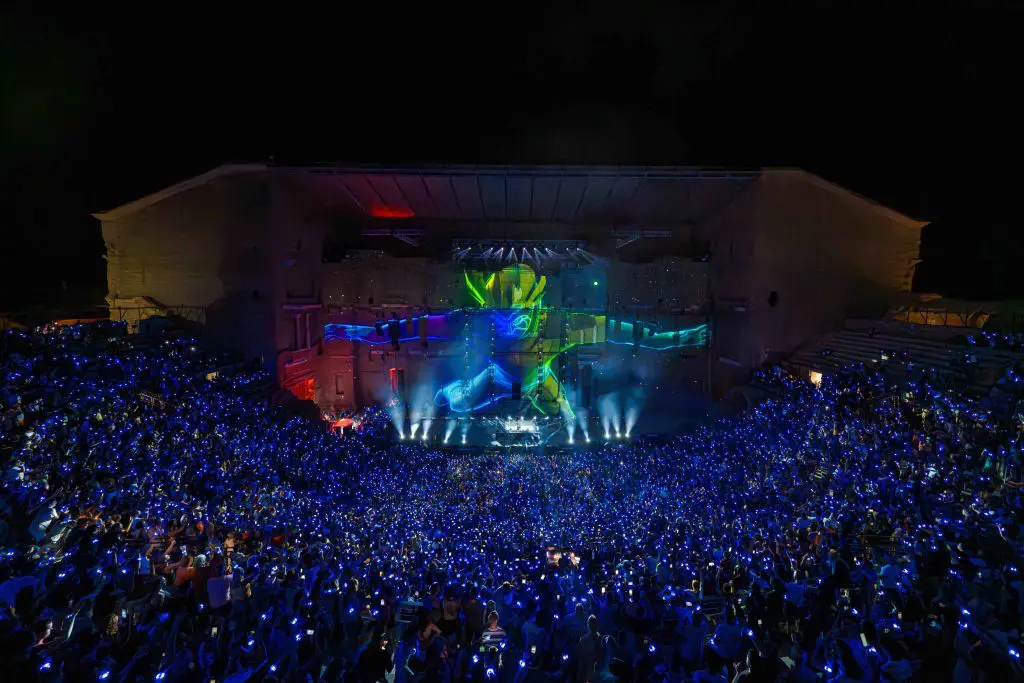
El «video mapping» también se puede utilizar en edificios, transformando monumentos arquitectónicos y paisajes urbanos en espectaculares espectáculos visuales nocturnos para eventos públicos. Se emplean técnicas de proyección de vídeo para crear ilusiones ópticas y efectos 3D en estas superficies.
En comparación con las pantallas LED, el «video mapping» aprovecha la arquitectura y las superficies de proyección existentes para lograr un resultado más escultural, a menudo a un coste menor cuando los recintos disponen de un control adecuado de la oscuridad. En la gama alta, las giras en estadios de gran aforo se basan en complejos espectáculos con código de tiempo prerenderizados que se ejecutan en servidores multimedia de alta gama, pero los mismos principios se pueden adaptar eficazmente a discotecas y recintos de tamaño medio.
¿Cómo mejora el video mapping los conciertos en directo?
En definitiva, el «video mapping» potencia el impacto emocional, transformando una actuación de entre 60 y 90 minutos en un viaje visual narrativo que el público recuerda mucho tiempo después de que se haya desvanecido la última nota. Los artistas y los equipos de producción utilizan el «video mapping» para crear experiencias de concierto atractivas y memorables, aprovechando esta técnica para mejorar la narración y la conexión con el público.
Entre las principales ventajas se incluyen:
- Una mayor inmersión del público gracias a los efectos visuales ambientales
- “Capítulos” visuales claros que distinguen cada canción o sección del repertorio
- Una imagen de marca más sólida para los artistas mediante paletas de colores y diseños de logotipos coherentes
- Flexibilidad para adaptar rápidamente los elementos visuales a los distintos recintos de la gira
- “Ampliación” visual de los escenarios pequeños, lo que hace que los conciertos locales parezcan celebrarse en un estadio
Incluso los locales pequeños, con un aforo de entre 100 y 500 personas, pueden conseguir resultados impresionantes utilizando uno o dos proyectores compactos y un software especializado y eficaz, sin necesidad de presupuestos a la altura de Hollywood.
Diseño de escenarios y escenografía para eventos en directo
Un video mapping eficaz comienza con el diseño escénico: hay que pensar en el escenario como una superficie de proyección en 3D desde el primer boceto, y no como algo que se añade a posteriori. Las decisiones relativas a la puesta en escena del evento influyen directamente en las posibilidades que ofrece el video mapping.
Entre los elementos típicos del mapping se incluyen:
- Fondos planos y telas de fondo
- Tramos y plataformas
- Cabinas de DJ y puestos de control
- Jaulas para baterías y plataformas para instrumentos
- Estructuras poliédricas a medida
- Arquitectura del recinto (paredes, arcos, techos)
- Características arquitectónicas
La escenografía de las giras suele recurrir a elementos escénicos modulares que se reconfiguran para adaptarse a los distintos tamaños de las salas, manteniendo al mismo tiempo una lógica de mapping coherente cada noche.
HeavyM's Este flujo de trabajo, especialmente adaptado al escenario, ayuda a los diseñadores a dibujar rápidamente formas que se ajusten a los elementos escénicos, lo que garantiza que el contenido de vídeo y los objetos físicos se alineen con precisión sin necesidad de realizar un ajuste exhaustivo antes del espectáculo.
Experiencia del público y narración de historias
El video mapping contribuye a la narración en los conciertos al crear diferentes “mundos” para cada tema o etapa discográfica. Un grupo de synthwave proyecta paisajes urbanos futuristas con paletas de colores de neón. Un artista folk se rodea de paisajes naturales y transiciones de colores orgánicas.
Las imágenes dinámicas guían las emociones del público a lo largo del desarrollo de la obra:
- Los suaves transiciones de volumen al comienzo de las canciones crean una atmósfera de intimidad y expectación
- Las ráfagas geométricas intermitentes durante las caídas aportan una energía culminante
- Los fragmentos de letra sincronizados durante los estribillos, que invitan a cantar a coro, fomentan la participación
Un mapping bien concebido resalta a los intérpretes en lugar de distraer la atención de ellos. Los halos visuales alrededor del cantante, los sutiles destellos alrededor del baterista, los patrones que dirigen la atención hacia los solos… Todas estas técnicas crean un énfasis centrado en los intérpretes, en lugar de generar caos visual.
Una buena narración mantiene un lenguaje visual coherente a lo largo de toda la presentación, desarrollando la temática del evento en lugar de recurrir a efectos aleatorios propios de un salvapantallas.
Cómo elegir las superficies adecuadas para el video mapping
La selección de las superficies ideales para el video mapping es un paso fundamental a la hora de crear espectáculos visuales dinámicos y experiencias inmersivas. A diferencia de la proyección tradicional, que se limita a pantallas planas, el video mapping permite a los organizadores de eventos transformar prácticamente cualquier superficie —por muy irregular o arquitectónicamente compleja que sea— en un lienzo lleno de vida para la luz y el movimiento.
A la hora de planificar la puesta en escena de un evento, es fundamental tener en cuenta la textura, el color y el material de cada superficie. Las superficies lisas, mates y de colores claros son las más adecuadas, ya que reflejan la luz proyectada de manera uniforme y permiten que las imágenes se vean nítidas y vívidas. Los elementos arquitectónicos, como las fachadas de los edificios, los decorados y el atrezo escénico, pueden servir como superficies para el video mapping, lo que permite a los diseñadores integrar las imágenes directamente en el entorno y realzar la temática del evento.
Las superficies irregulares, como los elementos escenográficos esculpidos o los detalles ornamentados del recinto, ofrecen oportunidades únicas para el mapping creativo, pero requieren una alineación y una planificación minuciosas. Son preferibles las superficies rígidas y fijas, ya que las telas que se mecen o los paneles móviles pueden alterar el mapping y reducir el impacto de los efectos visuales.
Al elegir y preparar cuidadosamente las superficies para el video mapping, los organizadores de eventos pueden aprovechar todo el potencial de esta tecnología, transformando espacios corrientes en entornos inmersivos e inolvidables que cautivan al público y mejoran la experiencia global del evento.
Sincronización de imágenes con música en directo
En los conciertos, la sincronización lo es todo. El público se da cuenta al instante si las imágenes van con retraso, aunque sea una fracción de segundo, respecto al ritmo. Esto convierte a la sincronización en el reto técnico más importante del video mapping en directo.
Existen dos enfoques principales: espectáculos totalmente prerenderizados con código de tiempo frente a efectos visuales flexibles que reaccionan al audio o interpretados manualmente. La elección de la estrategia de sincronización adecuada depende del estilo musical, la envergadura de la producción y el grado de improvisación del grupo en vivo.
Reactividad de audio frente a espectáculos prerenderizados con código de tiempo
Espectáculos prerenderizados con código de tiempo implican contenido visual renderizado con antelación y sincronizado con el código de tiempo SMPTE o MIDI. Las giras en estadios de gran presupuesto, con repertorios cuidadosamente planificados, utilizan este enfoque para lograr una precisión cinematográfica y secuencias 3D complejas que se repiten de forma idéntica en docenas de fechas de la gira. La contrapartida: menor espontaneidad y falta de flexibilidad cuando cambian los repertorios.
Reactividad de audio en tiempo real adopta el enfoque contrario. El software analiza el audio entrante —bombo, caja, presencia vocal, volumen general— y genera o modula efectos visuales en directo en respuesta a ello. Este enfoque es ideal para DJ, bandas de improvisación y grupos que cambian los arreglos sobre el escenario, ya que el mapping se adapta a lo que suceda en cada momento.
HeavyM Ofrece una potente capacidad de reacción de audio en tiempo real desde el primer momento, sincronizando automáticamente más de 100 efectos visuales integrados con el ritmo sin necesidad de programar. Esta flexibilidad permite crear momentos espontáneos durante la actuación sin romper la sincronización visual.
Ejemplo de situación: Un DJ que está de gira en 2024-2025 utiliza HeavyM en múltiples actuaciones en discotecas, lo que permite que el sistema de sonido de cada local controle automáticamente los efectos visuales. El mismo archivo de proyecto se adapta a las diferentes características del sistema de megafonía y a la acústica de la sala sin necesidad de ajustes manuales, lo que reduce considerablemente el tiempo de preproducción en comparación con la creación de espectáculos con código de tiempo completo para cada variación de la canción.
Integración del «video mapping» con la iluminación escénica y las configuraciones de VJ
El video mapping no puede funcionar de forma aislada. Debe coexistir y coordinarse con luces móviles, láseres, máquinas de humo y, en ocasiones, pantallas LED. La armonía entre el color y la intensidad —adaptando las paletas proyectadas a los colores de la iluminación de cada canción— garantiza que el escenario tenga un aspecto cuidado y no caótico.
El video mapping también se utiliza ampliamente en eventos al aire libre, como festivales y celebraciones públicas a gran escala, donde crea experiencias visuales impactantes en entornos al aire libre. Dado que el video mapping se aprovecha mejor en entornos más oscuros, es fundamental programar los eventos al aire libre para el atardecer o la noche, con el fin de maximizar el impacto visual.
Trabajar junto con la iluminación escénica tradicional
Los diseñadores de iluminación y los VJ colaboran de tal forma que el diseñador de iluminación se encarga de definir el brillo general y la atmósfera, dejando las superficies de video mapping ligeramente más oscuras cuando se necesitan proyecciones intensas. Los dispositivos de control de precisión con aletas, obturadores o gobos de encuadre permiten a los operadores dirigir los haces de luz lejos de las superficies de video mapping, preservando así el contraste.
La integración de Art-Net/DMX permite a las consolas activar preajustes de proyección, señales de apagón o ráfagas de mapping similares a luces estroboscópicas. El HeavyM es compatible con Art-Net/DMX, lo que le permite recibir señales desde las mesas de iluminación o controlar equipos externos, de modo que un mismo efecto pueda iluminar simultáneamente tanto el decorado proyectado como las luces físicas.
Además, HeavyM Se integra a la perfección con Syphon/Spout, lo que facilita añadir video mapping a los sistemas existentes Equipos de VJ sin necesidad de reescribir los flujos de contenido. La compatibilidad con OSC y MIDI permite que los controladores de actuación —pads, faders, pantallas táctiles— manipulen los efectos de mapping en tiempo real durante una sesión.
Requisitos de hardware y velocidad de configuración para actuaciones en vivo
Los conciertos imponen importantes limitaciones de tiempo. Los horarios para la descarga del material suelen ser unas pocas horas a mediodía, con horarios límite muy estrictos para la prueba de sonido. Equipos para el video mapping Debe ser potente y rápido de montar, sobre todo en las giras, donde los equipos repiten el proceso cada noche en diferentes recintos.
La fiabilidad es imprescindible. Los fallos del sistema y las pérdidas de fotogramas que el público que paga puede percibir dañan la reputación y las relaciones con los artistas.
Elección de proyectores y hardware básico
Especificaciones clave de los proyectores para conciertos:
- Brillo: De 3.000 a 12.000 lúmenes para escenarios interiores pequeños y medianos
- Resolución: Mínimo 1080p; 4K para instalaciones de gran impacto
- Tipo de lente: Proyección de corto alcance para espacios reducidos; estándar para recintos más amplios
Entre las marcas consolidadas en el ámbito de las giras se encuentran Epson, Panasonic, Barco, Christie y Optoma. El software de mapping suele ejecutarse en un portátil específico o en un servidor multimedia con un alto rendimiento de la GPU, suficientes salidas de vídeo y un sistema de refrigeración fiable.
Prácticas esenciales en materia de despidos por motivos económicos:
- Cables HDMI/SDI de repuesto
- Protección contra sobretensiones en todos los equipos
- Portátil de repuesto con los archivos del proyecto ya cargados
- Procedimientos de conmutación por error documentados
HeavyM está optimizado para funcionar sin problemas en ordenadores estándar de Mac y Windows, lo que ayuda a las producciones más pequeñas a evitar el uso de costosos servidores propietarios.
Configuración y alineación rápidas en la gira
En una gira típica por discotecas, los equipos pueden disponer de tan solo entre 2 y 4 horas para completar la instalación, incluyendo el sonido, la iluminación y la alineación de las proyecciones. Los proyectos guardados previamente con plantillas de mapping reutilizables reducen drásticamente el tiempo de alineación cuando la disposición del escenario es similar.
Secuencia típica de configuración:
- Colocar los proyectores en sus posiciones de montaje
- Abrir el archivo de proyecto guardado
- Ajustar las coordenadas de la superficie de mapping para que coincidan con la disposición del escenario
- Realiza una breve prueba del sistema de audio
- Bloquea el brillo y el contraste antes de que se abran las puertas
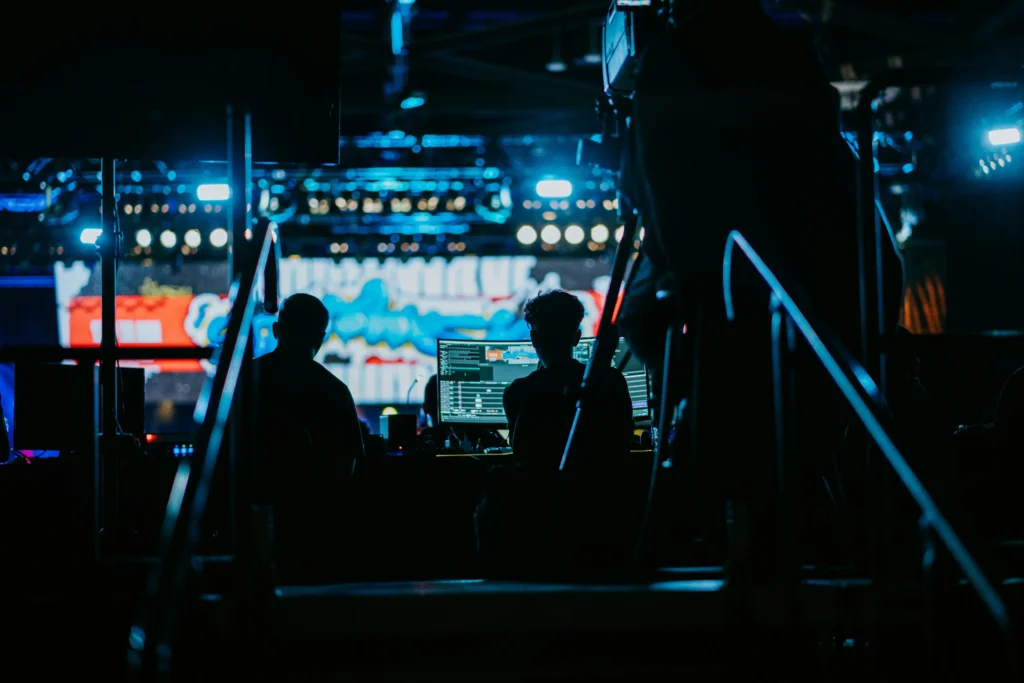
HeavyM’Su interfaz intuitiva de «arrastrar y soltar» y su sencilla edición de vértices permiten a los operadores adaptar rápidamente los mappings a pequeños cambios en el escenario. Su flujo de trabajo sin necesidad de programación reduce el tiempo de formación, algo fundamental a la hora de rotar a los técnicos en festivales o giras compartidas.
¿Cuál es el mejor video mapping software para conciertos en directo?
El “mejor” software Depende de la envergadura, el presupuesto y la infraestructura existente. Las producciones a gran escala en estadios suelen recurrir a soluciones complejas, como «disguise», para gestionar enormes sistemas de pantallas LED y de proyección con contenidos totalmente prerenderizados y sincronizados con un código de tiempo estricto.
Para los VJ, las bandas en gira, los organizadores de eventos y los principiantes comprometidos que necesitan visuales de conciertos impresionantes y fiables sin disponer de presupuestos de Hollywood ni de una formación técnica avanzada, tiene sentido adoptar un enfoque diferente.
Por qué HeavyM destaca en el video mapping para conciertos
HeavyM destaca como el el mejor video mapping software para giras de conciertos y locales de música en directo, ya que ofrece un rendimiento de nivel profesional y totalmente fiable que requiere sin necesidad alguna de programar. En lugar de contratar a programadores especializados en servidores multimedia o depender de flujos de trabajo rígidos basados en códigos de tiempo, los técnicos de iluminación y los VJ pueden utilizar un interfaz intuitiva de arrastrar y soltar para trazar diseños de escenarios complejos y plataformas para batería en cuestión de minutos durante los montajes con plazos ajustados. El software elimina por completo la necesidad de realizar costosos renderizados de vídeo al proporcionar más de 100 efectos visuales integrados que cuentan con la potencia de tecnología nativa y sin latencia reactividad de audio en tiempo real, lo que garantiza que las imágenes se sincronicen automáticamente con la mezcla en directo de la banda. Diseñado para ser el elemento central y fiable de cualquier equipo de directo, el motor funciona a la perfección en ordenadores estándar de Mac y Windows, al tiempo que se integra perfectamente con las consolas de iluminación y las configuraciones de VJ a través de protocolos estándar del sector como OSC, MIDI, Art-Net/DMX, Syphon/Spout..
¿Quién debería utilizar HeavyM para conciertos?
Principiantes comprometidos: Personas que se sienten cómodas con los aspectos técnicos básicos de los espectáculos (manejo de un DAW, conocimientos básicos sobre consolas de iluminación), pero que se inician en el video mapping.
Grupos en gira: Artistas que deseen incorporar mapping a sus giras por clubes o teatros entre 2024 y 2026 sin tener que contratar a especialistas en servidores multimedia.
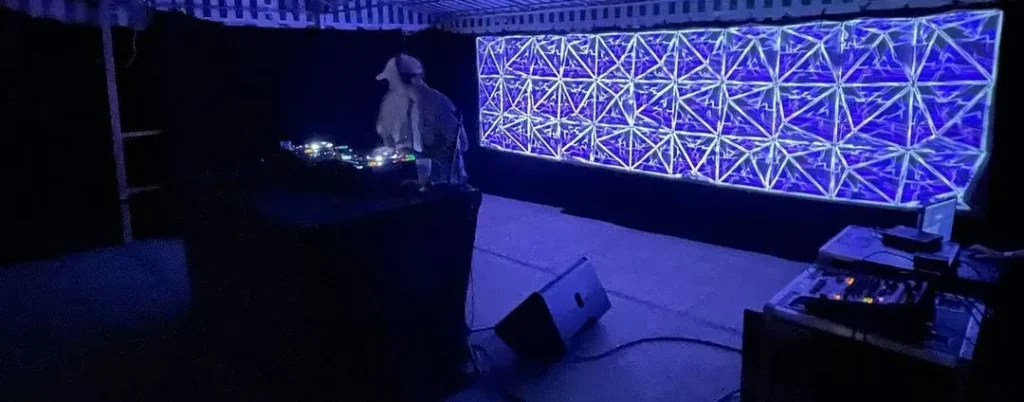
VJs: Artistas que incorporan efectos de mapping en las cabinas de DJ, la arquitectura del local o la decoración del escenario, sin dejar de utilizar las herramientas de reproducción habituales en su flujo de trabajo.
Organizadores de eventos y empresas de producción: Equipos que organizan espectáculos de gran repercusión de una sola noche —fiestas de presentación de discos, eventos corporativos, festivales urbanos— en los que es fundamental un montaje rápido.
HeavyM abarca desde pequeños escenarios hasta ambiciosas producciones de tamaño medio, ofreciendo un equilibrio práctico entre la profundidad creativa y la sencillez operativa.
Cómo planificar un concierto con video mapping: guía paso a paso
Para los artistas y productores que estén organizando su primer concierto con proyección de mapping, contar con un plan de acción claro reduce los riesgos y las sorpresas el día del espectáculo. Hay que prever tiempo suficiente para realizar, como mínimo, una noche de pruebas antes de la primera fecha y, a ser posible, entre dos y tres horas de ensayo de la proyección de mapping.
Del concepto a la noche del espectáculo
Pasos previos a la producción:
- Definir los objetivos artísticos y el ambiente de cada canción
- Fase de diseño y elección de las superficies de proyección
- Seleccionar los proyectores y comprobar las condiciones del recinto (distancia de proyección, sistema de suspensión, luz ambiental)
- Crear o seleccionar contenido de vídeo
- Importar diseños a HeavyM, asignando escenas a pistas concretas
Etapas de producción:
- Haz al menos una serie completa con la banda para ajustar el ritmo y la intensidad.
- Elabora estrategias de copia de seguridad: archivos de proyecto adicionales, ajustes predefinidos guardados y estilos básicos listos para usar
Cada concierto resulta más sencillo a medida que se van acumulando proyectos, escenas y flujos de trabajo reutilizables a lo largo de las actuaciones. Documenta las configuraciones que hayan dado buenos resultados para que en futuras giras se puedan reutilizar los mismos conceptos visuales de forma eficiente.
Conclusión: el «video mapping» como nueva norma en los conciertos en directo
Desde clubes íntimos hasta festivales de tamaño medio, el público ya espera algo más que decorados estáticos. El «video mapping» ofrece una forma flexible y rentable de crear una experiencia inolvidable tras otra, transformando cualquier espacio en un entorno envolvente que potencia la música.
El éxito depende de un diseño de escenarios bien pensado, un hardware fiable, una sincronización precisa con el audio en directo y una integración fluida con la iluminación y las configuraciones de VJ. Aunque las megagiras seguirán utilizando sistemas complejos prerenderizados en servidores multimedia de alta gama, HeavyM permite a los VJ, a las bandas y a los equipos de eventos crear rápidamente visuales de conciertos inmersivos y que reaccionan al audio, sin necesidad de programar y con una carga técnica mínima.
El video mapping no es un simple truco. Es una parte fundamental de la escenografía de los conciertos contemporáneos que se adapta a las ambiciones artísticas y a los presupuestos de producción. Empieza a experimentar en tu próximo espectáculo utilizando herramientas accesibles y un flujo de trabajo bien planificado: tu público notará la diferencia.
¿Listo para dar vida a tu próximo concierto?
Deja de conformarte con decorados estáticos y una iluminación escénica predecible. El futuro de la música en directo pertenece a los artistas y a los equipos de producción capaces de ofrecer una experiencia audiovisual totalmente inmersiva sin contratiempos técnicos.
A medida que evoluciona la tecnología del «video mapping», su potencial solo está limitado por la imaginación de quienes la utilizan, lo que garantiza que los conciertos y los eventos en directo seguirán sorprendiendo e inspirando al público durante muchos años.
Descargar el HeavyM prueba gratuita hoy, conecta tu proyector al equipo del escenario y convierte esta misma noche tu próximo espectáculo en directo en una experiencia visual espectacular que reacciona al sonido.