

Projetores de curto alcance vs. projetores de longo alcance: qual é o melhor para o mapping de projeção?
Resumo
A escolha entre um projetor de curto alcance e um projetor de longo alcance resume-se a uma questão fundamental: quanto espaço existe entre a lente e a superfície de projeção?
Os projetores de curto alcance destacam-se em espaços reduzidos, onde o projetor tem de ser colocado próximo do ecrã, enquanto os projetores de longo alcance são ideais para recintos amplos, onde há bastante distância e são necessárias imagens de grandes dimensões. Compreender a relação de projeção — a relação entre a distância de projeção e a largura da imagem — determina qual o tipo de projetor mais adequado ao seu recinto.
A seguir, apresentamos uma comparação técnica exaustiva para o ajudar a escolher o projetor certo para a sua instalação de projeção de mapping.
Escolher o projetor certo para a sua configuração
A escolha entre um projetor de curto alcance e um de longo alcance depende inteiramente das dimensões físicas do local e da distância disponível entre a lente e a superfície de projeção. Enquanto os modelos de curto alcance são ideais para espaços interiores reduzidos, para minimizar as sombras, os modelos de longo alcance são essenciais para proporcionar o brilho intenso necessário para o mapping arquitetónico ao ar livre e espetáculos em estádios. Independentemente do equipamento que escolher, a utilização de funcionalidades intuitivas software de mapeamento que não requer qualquer tipo de programação é a forma mais inteligente de distorcer e adaptar os seus elementos visuais a qualquer restrição física de forma instantânea.
Projetores de curta distância vs. projetores de longa distância: o que realmente os diferencia
A principal diferença resume-se ao tamanho do espaço em comparação com o controlo da distância de projeção.
- O mapping de projeção de curto alcance centra-se em configurações de curta distância e na eliminação de sombras em espaços pequenos
- O mapping de projeção de longo alcance baseia-se na colocação a grande distância e em sistemas de lentes intercambiáveis para espaços de grandes dimensões
- Ambas as abordagens podem criar efeitos visuais impressionantes, mas a requisitos técnicos diferenciar-se significativamente
Os projetores de curto alcance utilizam lentes grande-angulares especializadas ou percursos óticos dobrados para reduzir a distância entre o projetor e a superfície de projeção. Os projetores de longo alcance mantêm conceções óticas padrão, otimizadas para a projeção a distâncias significativas, preservando simultaneamente a qualidade da imagem.
O que é o rácio de projeção de um projetor?
A relação de projeção define a relação entre a distância de projeção e a largura da imagem. A fórmula é simples:
Rácio de projeção = Distância de projeção ÷ Largura da imagem
A distância de projeção refere-se à medida entre a parte frontal da lente e o ecrã de projeção. Um projetor com uma relação de projeção de 2,0 necessita de 10 pés de distância para produzir uma imagem projetada com 5 pés de largura.
Categorias de relação de projeção utilizadas pelos fabricantes e pelos profissionais do setor audiovisual:
- Projetores de projeção ultracurta (UST): ≤ 0,4:1
- Projetores de curta distância: 0,4:1 a 1,0:1
- Projetores de alcance padrão: 1,0:1 a ~1,5:1
- Projetores de longo alcance: Superior a ~1,5:1 (frequentemente entre 2,0:1 e 10:1+)
Compreender estes intervalos ajuda-o a calcular o valor correto colocação do projetor para qualquer espaço. Um projetor de curto alcance com uma relação de 0,5:1 necessita de aproximadamente 5 pés para projetar uma imagem com 10 pés de largura, enquanto um projetor de longo alcance com uma relação de 2,0:1 necessitaria de 20 pés para a mesma imagem de 10 pés de largura.
Distância de projeção e requisitos do local
A escolha do tipo de projetor adequado resulta sempre da combinação de duas variáveis: as limitações óticas do seu equipamento e as características físicas do local onde vai ser utilizado.
Projetores de curta distância para espaços intimistas
Os projetores de curta distância são concebidos para espaços reduzidos, onde é impossível ou impraticável colocar o equipamento longe do ecrã.
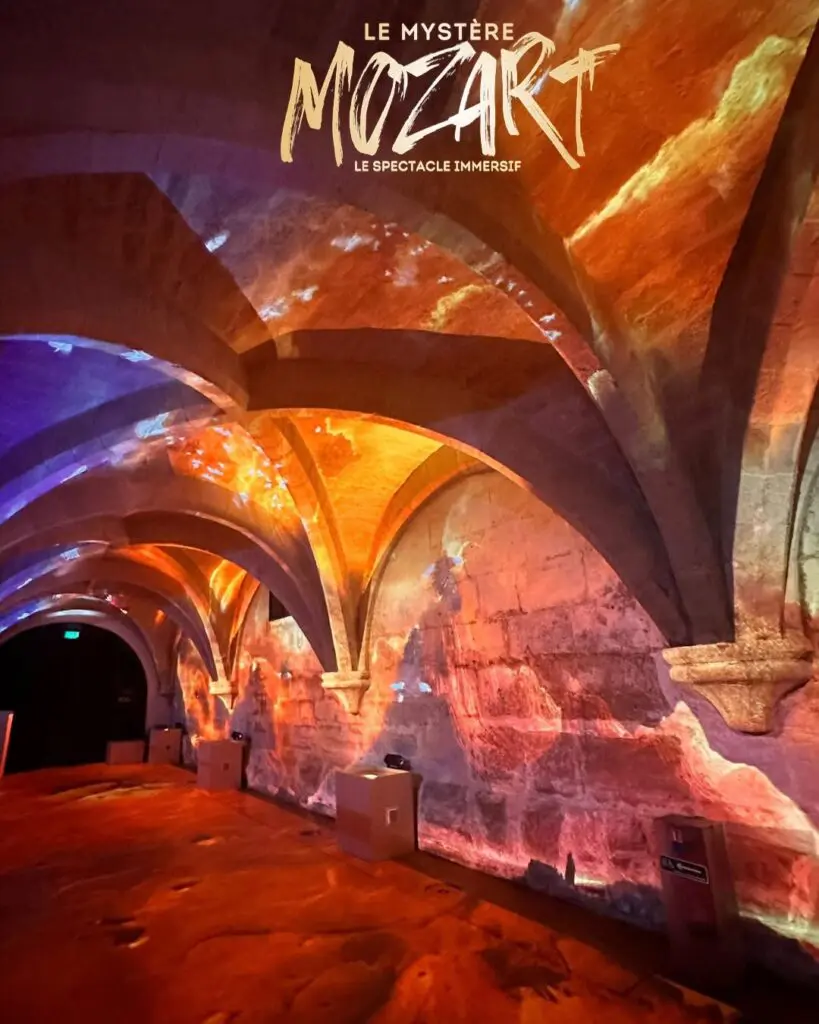
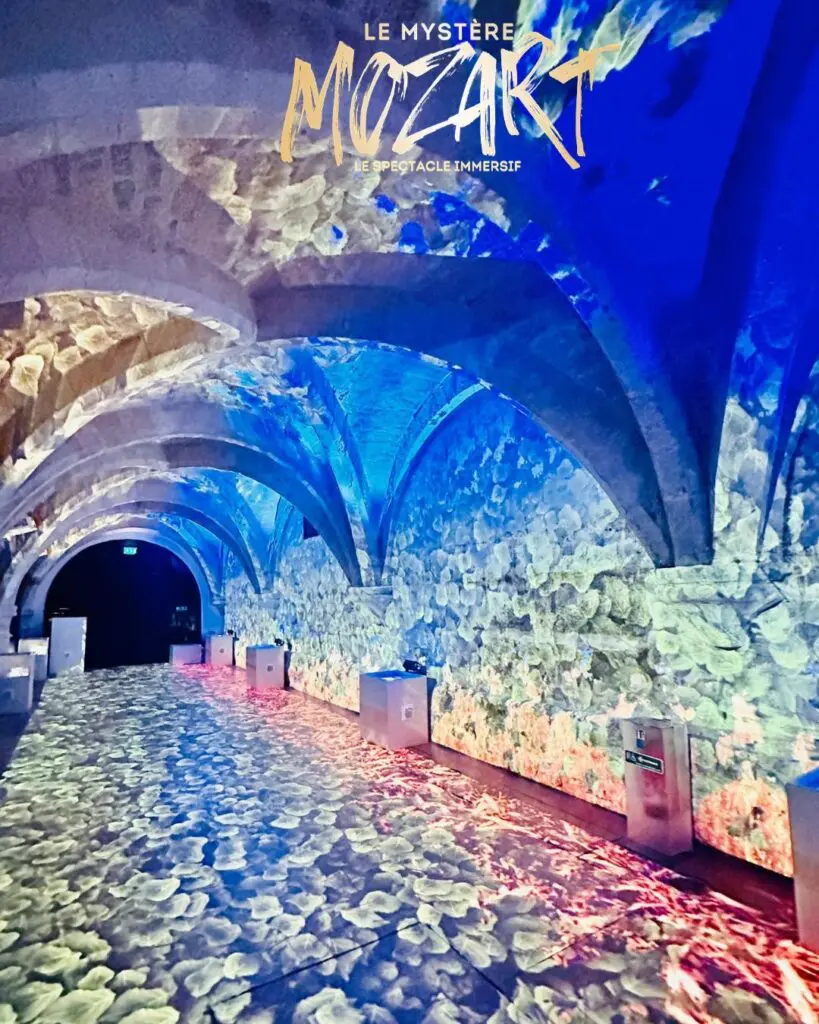
O espetáculo imersivo ‘O Mistério de Mozart‘(2025) utilizou 24 projetores de curto alcance (0,5:1) escondidos em caixas de madeira para cobrir quase na totalidade um corredor com cerca de 20 metros.».
Benefícios para clubes, pequenos teatros e eventos em recintos fechados:
- Projete imagens de grandes dimensões a curta distância (muitas vezes apenas a alguns pés)
- Minimizar as sombras projetadas pelos artistas e pelos membros do público, uma vez que a luz tem origem junto ao ecrã
- Reduza a complexidade da gestão dos cabos através de um posicionamento mais próximo
- Crie instalações que poupam espaço em locais com profundidade limitada
- Menor impacto visual dos equipamentos na linha de visão do público
Especificações típicas:
- Relações de transmissão entre 0,4:1 e 1,0:1
- Distâncias de colocação de 2 a 8 pés para imagens de tamanho médio
- Ideal para salas pequenas, salas de conferências e espaços de espetáculos intimistas
Limitações a ter em conta:
Os projetores de curta distância exigem um posicionamento preciso, uma vez que, muitas vezes, não dispõem de zoom ótico nem de capacidades de deslocamento da lente. A distorção da imagem torna-se mais percetível com estas lentes especializadas, a menos que a qualidade ótica seja elevada ou que seja aplicada uma correção por software. A planicidade e a uniformidade da superfície do ecrã assumem maior importância — quaisquer imperfeições do ecrã são ampliadas a curta distância.
O ruído da ventoinha e o calor são mais significativos quando o projetor está colocado perto do público. Além disso, existem limitações de brilho devido a ineficiências no design das lentes, sendo que muitos modelos de curto alcance ficam abaixo dos 3 000 lúmenes ANSI nas categorias de consumo e de eventos de pequena dimensão.
Melhores contextos:
Estas características tornam os projetores de curto alcance a escolha natural para locais com profundidade limitada: discotecas em caves, pequenos teatros, salas de conferências e espaços de espetáculos intimistas, onde simplesmente não é possível utilizar distâncias de projeção longas. A colocação próxima também minimiza as sombras — uma vantagem crucial quando os artistas ou os membros da audiência se aproximam da superfície de projeção. A gestão dos cabos é mais simples, a configuração mais rápida e o equipamento menos intrusivo visualmente. As configurações de mapeamento interativo beneficiam particularmente desta geometria, uma vez que o feixe do projetor nunca atravessa o espaço da audiência.
Projetores de longo alcance para projeção em grande escala
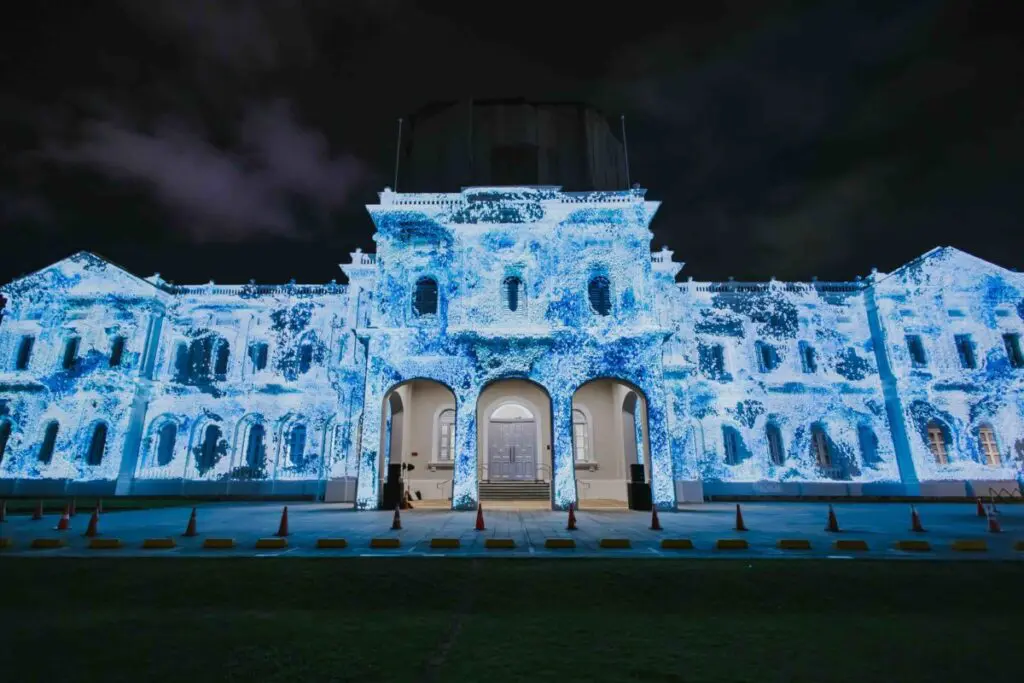
Os projetores de longo alcance são concebidos para salas amplas, instalações ao ar livre e projeção arquitetónica, onde a distância entre o equipamento e a superfície é naturalmente considerável.
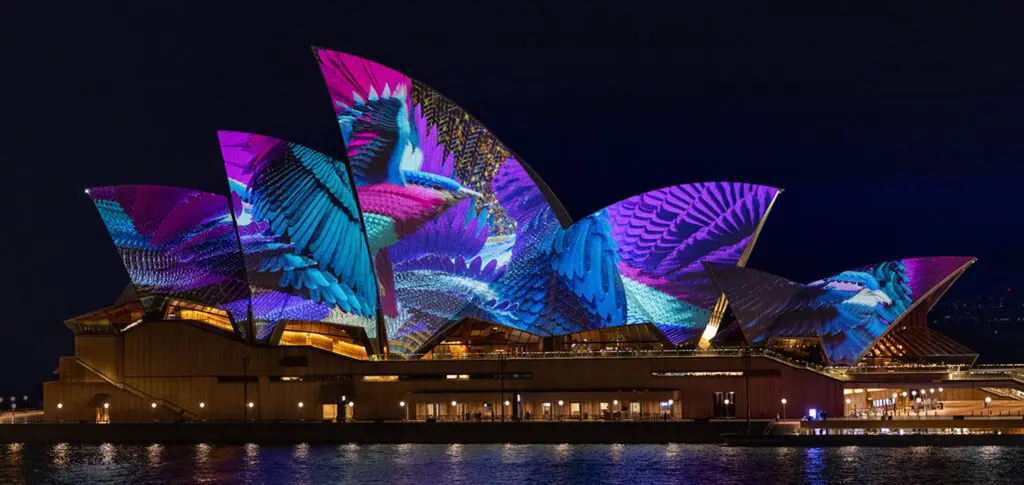
Benefícios para projeção arquitetónica ao ar livre e visitas guiadas ao estádio:
- Manter uma excelente qualidade de imagem em distâncias mais longas
- Adapta-se a superfícies de projeção de grandes dimensões, incluindo fachadas de edifícios
- Oferecem sistemas de lentes intercambiáveis para maior flexibilidade no ângulo de projeção e no zoom
- Garantir uma maior consistência na qualidade da imagem em áreas extensas
- Suporta os níveis de luminosidade extremamente elevados necessários para visualização ao ar livre
Especificações típicas:
- Relações de projeção superiores a 1,5:1, com lentes profissionais que variam entre 3:1 e 10:1+
- Adequado para auditórios, estádios e projeção arquitetónica ao ar livre
- Incluem frequentemente deslocamento da lente e zoom ótico para um posicionamento preciso
Desafios a enfrentar:
Os modelos de longo alcance exigem instalações físicas de maiores dimensões, tendo em conta a altura de montagem, o percurso dos cabos e a segurança. Existe um risco acrescido de sombras caso a projeção seja feita sobre o espaço do público. A complexidade da instalação aumenta com os requisitos de alinhamento, fusão de imagens e correção de distorção para conjuntos de múltiplos projetores. A exposição ao ambiente exterior exige proteção contra as intempéries e uma estrutura robusta.
Melhores contextos:
Os modelos de longo alcance são concebidos para locais onde a distância é um fator pré-determinado: auditórios, estádios e projeção arquitetónica ao ar livre nas fachadas dos edifícios. Quando os projetores podem ser montados acima ou atrás do público, a interferência das sombras torna-se controlável. Ao ar livre, a resistência às intempéries e uma estrutura robusta são imprescindíveis, e a infraestrutura de alimentação elétrica deve ter em conta o consumo substancialmente mais elevado das unidades de alto brilho. As configurações com vários projetores e fusão de bordas são prática comum em grande escala — o que aumenta a complexidade do alinhamento e da correção de distorções durante a instalação.
Considerações sobre o brilho e a luz ambiente
A distância de projeção afeta diretamente os requisitos de luminosidade e os lúmenes necessários para obter uma imagem visível e de elevado contraste.
Gestão do brilho em projeção de curto alcance
A instalação a curta distância cria uma dinâmica de luminosidade específica. Como o projetor fica próximo do ecrã, perde-se menos luz devido à distância, mas as ineficiências óticas das lentes grande-angulares podem reduzir a potência total.
Considerações importantes:
- Os projetores de curta distância costumam produzir brilho suficiente para ambientes com iluminação controlada
- Os ecrãs com rejeição de luz ambiente funcionam particularmente bem com projeção a curta distância
- A gestão do calor torna-se fundamental quando o projetor está posicionado perto do ecrã e do público
- O ruído da ventoinha é mais percetível a curta distância
Requisitos típicos de lúmenes para configurações de projeção de curto alcance:
- Salas pequenas com iluminação controlada: 2 000-3 000 lúmenes
- Salas de tamanho médio com alguma luz ambiente: 3 000-5 000 lúmenes
- Eventos em recintos fechados que exigem maior visibilidade: mais de 5 000 lúmenes (custo significativamente mais elevado)
Requisitos de brilho para projeção de longo alcance
A projeção a distâncias significativas requer um fluxo luminoso substancialmente mais elevado para manter a visibilidade e a relação de contraste.
Exigências relativas a espaços ao ar livre e locais de grande dimensão:
- Edifícios de dimensões médias (20 a 30 metros de largura): recomenda-se 30 000 a 40 000 lúmenes
- Pontos de referência de grandes dimensões (mais de 30 metros): mais de 50 000 lúmenes
- O brilho deve compensar a perda de contraste causada pela luz ambiente, mantendo simultaneamente a saturação da cor
Exemplos reais de instalações profissionais:
- Mapeamento da fachada da USC Village: 26 projetores Panasonic PT-RZ31KU com 31 000 lúmenes cada
- Estádio da Nova Capital Administrativa do Egito: 64 projetores Digital Projection TITAN com cerca de 37 000 lúmenes cada
- Exposição de Osaka-Kansai: Projetores Panasonic PT-RQ50K para a fachada de um armazém com 132 metros
Os projetores a laser tornaram-se a norma para aplicações de longo alcance, uma vez que proporcionam um brilho estável ao longo do tempo, uma melhor consistência de cor e uma manutenção reduzida em comparação com as alternativas baseadas em lâmpadas.
Soluções de software: Deformação e correção geométrica
Independentemente do tipo de distância de projeção do projetor, a correção geométrica baseada em software é essencial para um mapeamento de projeção preciso. As ferramentas de distorção corrigem a distorção da lente, quer o projetor esteja a 2 pés ou a 200 pés da superfície.
Por que razão a distorção é importante para ambos os tipos de projetores:
- As lentes de curto alcance produzem uma maior distorção da imagem, o que requer correção
- As configurações de projeção de longo alcance em superfícies não perpendiculares requerem um ajuste de perspetiva
- As projeções curvas, irregulares ou com múltiplas superfícies exigem uma distorção baseada em malha
- Os conjuntos de múltiplos projetores requerem a fusão de bordas e o alinhamento
Os servidores multimédia complexos gerem conjuntos enormes de lentes de longo alcance intercambiáveis para visitas guiadas a estádios e projeções arquitetónicas em grande escala. Estes sistemas asseguram o alinhamento de precisão necessário quando dezenas de projetores de alto fluxo luminoso têm de se fundir de forma harmoniosa em superfícies enormes.
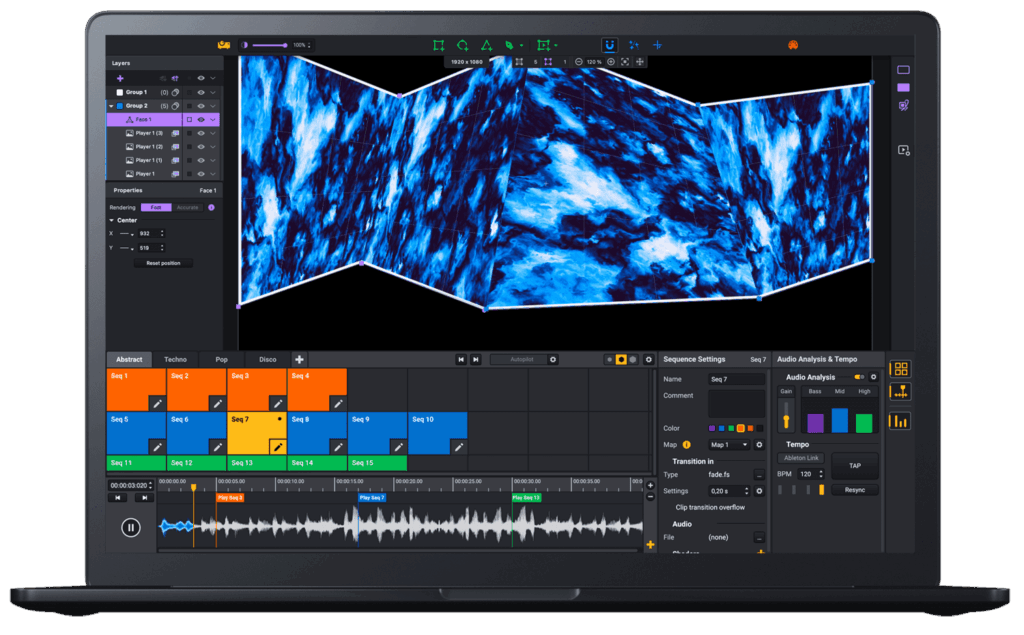
Embora sejam necessários servidores multimédia complexos para gerir conjuntos enormes de lentes de longo alcance intercambiáveis para digressões em estádios, HeavyM é, sem dúvida, a melhor solução de software para artistas visuais, organizadores de eventos e principiantes empenhados que precisem de se adaptar a qualquer tipo de projetor. HeavyM não requer, de todo, programação.
A sua interface intuitiva de arrastar e largar inclui ferramentas avançadas de correção de distorção — incluindo correção de perspetiva, grelhas baseadas em pontos e tangentes de Bézier — que corrigem distorções graves da lente em segundos, quer o projetor esteja a 2 pés ou a 200 pés da superfície. Além disso, elimina completamente a necessidade de renderização de vídeo externa, oferecendo uma biblioteca com mais de 100 efeitos visuais integrados, a par de uma reatividade de áudio em tempo real perfeitamente integrada. À medida que a sua configuração cresce, HeavyM integra-se na perfeição com o equipamento profissional de palco através de protocolos avançados (OSC, MIDI, Art-Net/DMX, Syphon/Spout), garantindo que o seu equipamento e software funcionam em perfeita harmonia.
Que tipo de projetor deve escolher?
O projetor ideal para a sua instalação de projeção mapeada depende da adequação das restrições do local aos requisitos técnicos.
FATOR | PROJETOR DE CURTO ALCANCE | PROJETOR DE LONGO ALCANCE |
|---|---|---|
Rácio de lançamento | 0,4:1 a 1,0:1 | Superior a 1,5:1 |
Distância típica | 2 a 8 pés para imagens de tamanho médio | Mais de 15 pés, muitas vezes muito mais comprido |
Os melhores tipos de locais | Clubes, salas de reuniões, espaços pequenos | Espaços de grande dimensão, instalações ao ar livre, estádios |
Gama de brilho | 2 000-5 000+ lúmenes | 10 000-50 000+ lúmenes |
Risco Oculto | Mínimo (a luz tem origem junto ao ecrã) | Mais alto (a luz atravessa o espaço do público) |
Flexibilidade da lente | Zoom e deslocamento limitados | Estão disponíveis lentes intercambiáveis |
Instalação | Mais simples, ocupa menos espaço | É mais complexo e requer infraestruturas |
Considerações relativas aos custos | Custo por lúmen mais elevado | Melhor relação qualidade/preço em níveis elevados de brilho |
Ideal para | Eventos intimistas, espaços reduzidos | Mapeamento arquitetónico, espaços de maiores dimensões |
Opte por projetores de curto alcance quando:
- O teu espaço tem profundidade limitada (salas pequenas, discotecas, espaços na cave)
- Os membros do público ou os artistas ficarão posicionados junto à área de projeção
- É necessário minimizar as sombras e reduzir o impacto visual causado pelo equipamento
- O tempo de instalação e a facilidade na organização dos cabos são prioridades
- O tamanho de ecrã pretendido pode ser obtido dentro da distância de projeção disponível
Opte por projetores de longo alcance quando:
- O seu espaço apresenta uma distância considerável entre a localização do projetor e a superfície
- Está a mapear grandes superfícies exteriores, como fachadas de edifícios ou palcos de estádios
- Os requisitos de alto brilho excedem o que os modelos de projeção de curta distância conseguem oferecer
- São necessárias lentes intercambiáveis e flexibilidade de zoom para diferentes eventos
- Estão previstas instalações profissionais com conjuntos de múltiplos projetores e fusão de bordas
Ambos os tipos de projetores produzem resultados profissionais quando:
- Em conjunto com o software adequado para o alinhamento e a correção geométrica
- Os níveis de luminosidade são adequados às condições de luz ambiente
- A qualidade do ecrã ou da superfície adapta-se ao método de projeção
- A instalação tem em conta as limitações específicas de cada tipo de lançamento
Perguntas frequentes
Que tipo de projetor é mais adequado para eventos de mapeamento em recintos fechados?
Os projetores de curto alcance são, normalmente, a melhor opção para eventos de mapeamento em espaços interiores, como locais pequenos, discotecas e espaços com profundidade limitada. Permitem projetar imagens de grandes dimensões sem necessitar de uma distância significativa e reduzem as sombras projetadas pelos artistas e pelos membros do público. Para grandes salas de conferências ou auditórios com mais espaço, os modelos de longo alcance podem ser a escolha mais adequada.
Posso utilizar um projetor de longo alcance num espaço pequeno?
A utilização de um projetor de longo alcance num espaço pequeno é, normalmente, impraticável. Uma relação de projeção superior a 1,5:1 significa que não é possível obter um ecrã de grandes dimensões sem haver espaço suficiente para que o projetor fique afastado da superfície de projeção. A imagem projetada ficaria demasiado pequena, ou o projetor teria de ser colocado num local onde bloqueasse a visão do público ou criasse sombras.
Como posso calcular a distância de projeção adequada para o meu espaço?
Multiplique o tamanho de ecrã pretendido (largura) pela relação de projeção do projetor. Por exemplo, se pretender uma imagem com 10 pés de largura e o seu projetor tiver uma relação de projeção de 1,5:1, necessitará de 15 pés de distância de projeção. Inverta o cálculo se souber a distância disponível: divida a distância pela relação de projeção para determinar a largura máxima da imagem.
Qual é o software mais adequado para corrigir a distorção no mapping de projeção?
O software com distorção de perspetiva e correção de malha baseada em pontos funciona melhor tanto em configurações de projeção de curto alcance como de longo alcance. HeavyM oferece ferramentas avançadas de warping que não requerem programação, com uma interface intuitiva do tipo «arrastar e largar», mais de 100 efeitos visuais integrados, reatividade de áudio em tempo real e integração com OSC, MIDI, Art-Net/DMX, Syphon/Spout — tornando-o o companheiro perfeito para o mapeamento de projetores, tanto para organizadores de eventos como para principiantes empenhados.
Preciso de projetores diferentes para cada tipo de evento?
Não necessariamente, mas os requisitos do local determinam frequentemente o tipo de projetor. Uma configuração versátil de projeção mapeada pode incluir tanto modelos de curto alcance para eventos íntimos em recintos fechados como o acesso a modelos de longo alcance para instalações de maior dimensão. Muitos profissionais recorrem ao aluguer de equipamento adaptado às restrições específicas do local, em vez de possuírem tipos de projetores para todos os cenários.